By Suresh Nautiyal Greenananda
Revolutions rarely begin only with manifestos or ideological doctrines. More often, they begin with ordinary objects that suddenly acquire extraordinary emotional meaning. A flag, a flower, a piece of bread, a colour, or even a simple household object can begin carrying the anxieties and aspirations of entire societies.
Across the world, democratic unrest has repeatedly expressed itself through symbols ordinary people instantly recognise.
In the United States, tea and coffee became symbols of competing democratic moods. The Tea Party movement, emerging around 2009 during the presidency of Barack Obama, invoked the historic Boston Tea Party of 1773 to symbolise revolt against government overreach, taxation, and political elites. Emotional, patriotic, and confrontational, it reshaped American conservatism and reflected the age of television populism.
Soon afterward came the Coffee Party, launched by activist Annabel Park. If tea symbolised agitation, coffee symbolised conversation. Drawing upon the old democratic culture of cafés and public discussion, the movement imagined democracy as dialogue rather than conflict. Yet moderation struggled to compete with outrage in an increasingly polarised media environment.
Elsewhere, different societies discovered their own political symbols. France’s Yellow Vest movement transformed a roadside safety jacket into a symbol of working-class anger against inequality and economic neglect. In Hong Kong, umbrellas used against tear gas evolved into emblems of democratic resistance. Ukraine’s Orange Revolution turned a colour into a rallying point for political reform. In Thailand, the three-finger salute borrowed from The Hunger Games became a coded sign of dissent against authoritarianism.
Tunisia perhaps revealed the most tragic symbolism of all. The uprising that ignited the Arab Spring began not inside parliament buildings but around a fruit cart. In 2010, street vendor Mohamed Bouazizi set himself on fire after repeated humiliation by authorities. His fruit cart suddenly became a symbol of wounded dignity, unemployment, corruption, and hopelessness. Bread, fruit, and survival itself acquired enormous emotional power across North Africa and West Asia.
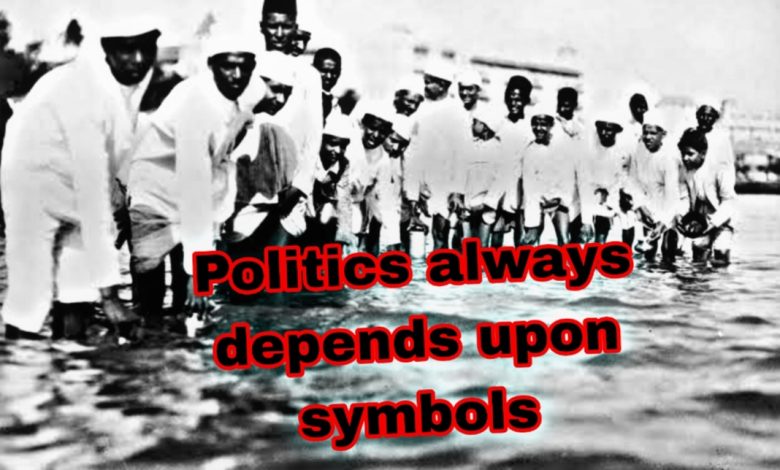
Earlier generations had their own symbolic politics. Mahatma Gandhi transformed salt into a moral weapon during the Salt March against British colonialism. Poland’s Solidarity movement used workers’ imagery and shipyard labour as symbols of democratic resistance. Occupy Wall Street reduced vast economic inequality into the unforgettable language of the “99 percent.”
And now comes India’s strange digital metaphor: the “Cockroach Janata Party.”
Unlike earlier movements, this is not a formal political organisation but an online phenomenon born from satire and youth frustration. After controversial remarks reportedly comparing sections of unemployed youth to “cockroaches,” many young people ironically embraced the image rather than rejecting it.
That transformation is sociologically revealing.
The cockroach symbolises invisibility, survival, and endurance under hostile conditions. By reclaiming the insult humorously, frustrated youth seemed to send back a message: if society treats us as disposable, we will survive nevertheless.
Unlike older ideological movements, the Cockroach Janata Party exists through memes, hashtags, parody posters, edited videos, and viral humour. Yet beneath the comedy lies a serious emotional reality: unemployment, corruption, examination scandals, nepotism, and the growing alienation of educated youth facing uncertain futures.
The Tea Party spoke in slogans. The Coffee Party spoke in conversations. The Yellow Vests occupied streets. Tunisia’s fruit cart expressed wounded dignity. The Cockroach Janata Party speaks in memes.
That difference reveals the transformation of democratic culture itself. The Tea Party belonged to television populism. The Coffee Party emerged during the early age of digital civic networking. The Cockroach Janata Party belongs entirely to the algorithmic era, where irony spreads faster than ideology and identity forms through viral participation rather than formal membership.
The deeper comparison among these symbolic movements also reveals changing public anxieties. The Tea Party feared excessive government power. The Coffee Party feared democratic polarisation. The Yellow Vests feared economic abandonment. Tunisia feared humiliation and hopelessness. The Cockroach Janata Party fears social invisibility.
That may be one of the defining psychological conditions of contemporary youth worldwide. Millions possess education, awareness, and connectivity, yet increasingly feel excluded from stable opportunity and meaningful participation. In earlier decades, such frustration entered labour unions or student movements. Today it often enters meme culture.
Tea represented rebellion. Coffee represented dialogue. Yellow vests represented economic anger. Umbrellas represented resistance. Fruit carts represented wounded dignity. The cockroach represents endurance within alienation.
Together, these strange political symbols narrate the emotional evolution of democratic societies in the twenty-first century — from organised ideological protest to digitally mediated irony born from exclusion, exhaustion, and uncertainty.
Democracy does not speak only through constitutions, elections, or parliamentary speeches. Sometimes it speaks through the ordinary objects people adopt when they feel unheard. And in this restless digital century, even a cockroach can become a political metaphor.
Cockroach Janata Party has 15.9 million followers and overtakes the saffron party on Instagram,