Vivek Shukla,
Sr. Journalist, author, columnist
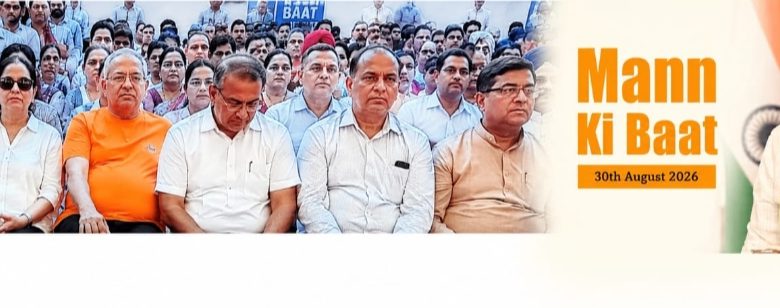
The mood was upbeat on the last Sunday of August, as families gathered around radios, phones and television sets, Prime Minister Narendra Modi addressed the country once again through Mann Ki Baat. And in Delhi’s Saini Enclave Park, a very large number of local people, including a lot of youngsters gathered to listen to the 137th episode of Mann Ki Baat, broadcast on 30 August 2026. Well, it was not a lecture from a distant podium. It was a warm, story-filled conversation that celebrated ordinary Indians who are quietly changing their communities and invited millions more to join them.
The programme opened with a delightful surprise: a Mumbai engineer-turned-marketer, Krishna Seshadri, who built bharatrajya.com so that anyone can pick a year and see which rulers governed which parts of India. Modi spoke to him live. Seshadri explained that school textbooks often focus on a few empires and leave out the Cholas, Pallavas, Ahoms and warrior queens such as Tribhuvan Mahadevi of Odisha.
From the past, the conversation turned to the future of India’s youth. Modi highlighted the growing “Nasha Mukt Yuva for Viksit Bharat” campaign. Addiction, he reminded listeners, does not destroy only one person; it wounds entire families. He challenged young musicians to write songs of hope, theatre groups to stage short plays about recovery, and content creators to produce messages in every language.
August’s patriotic calendar received special mention.National Handloom Day, the Quit India anniversary, Partition Horrors Remembrance Day, Independence Day, National Space Day and the 150th year of Vande Mataram. More than eight crore Tiranga selfies were uploaded this year. Through the Suryapath Tiranga initiative, the national flag travelled with the sun from Fiji at dawn to San Francisco at dusk, linking Indians across continents in a single, moving gesture of pride.
Women’s economic strength formed another heart of the address. Nearly 35 lakh women,46 per cent of PM SVANidhi beneficiaries,have used small loans to grow street-vending businesses. Noted social worker and Income Tax consultant S.K. Gambhir was listening to the Mann Ki Baat with Union Minister Harsh Malhotra and others in Saini Enclave said that PM Modi told the stories of Babita Sharma of Ghaziabad, who turned a modest worship-items stall into a proper shop, and T.S. Ningamma of Bengaluru, whose idli-dosa cart now supports her three children’s education.

Cleanliness, too, was presented as a people’s movement. In Patwai village of Rampur, Uttar Pradesh, two friends named Akash and Rohan started picking up litter; soon a youth team called Clean-up Patwai had cleared four Ganga ghats and more than a tonne of plastic. During the Amarnath Yatra, sanitation workers and pilgrims together collected over 400 metric tonnes of waste; 16,000 yatris took a cleanliness pledge and horse dung was converted into biogas to light a “Swachh Jyot.” Faith and civic duty, Modi suggested, can walk the same mountain path.
The Prime Minister then introduced listeners to Vesalu Puro of Phek, Nagaland, who turned a love of flowers into a commercial gladiolus farm that now sends blooms to Delhi and Mumbai, and to Maithili Bhue and more than 60 women of Dhodrokusum village in Odisha’s Debrigarh forests, who shifted from collecting firewood to protecting wildlife and running eco-tourism. Passion plus training, he said, can turn a hobby or a hardship into a livelihood that also heals the land.
He spoke with pride of Mission ShaktiSAT, which is teaching satellite technology to 12,000 girls from 108 countries, with the dream of sending a student-built satellite into lunar orbit. He celebrated Indian farmers who have discovered avocado as a profitable crop from Andhra Pradesh to Tamil Nadu and Karnataka’s coffee estates. The episode closed with an appeal for Vocal for Local as Janmashtami, Vishwakarma Puja and Diwali approach: look at every purchase and ask whether it was made in India.
Listeners responded with the same warmth the programme offered. Harsh Malhotra, who heard the broadcast in East Delhi,said the Prime Minister had given youth a clear resolve: “Nasha-mukt youth are the strong foundation of a developed India. His call will give new energy to healthy, positive and nation-building young power.”
In Lucknow, college student Ananya Sharma told a local reporter, “When Modi ji asked us to write slogans and songs against drugs, I felt he was speaking directly to my generation. We are already planning a street play.” Vegetable vendor Meena Devi in Ghaziabad said, “Hearing about sisters like Babita ji gave me courage. If they can grow their shops with a small loan, so can I.” Former bureaucrat Anil Shandilya, who was also listening Mann Ki Baat at East Delhi, said “The history website and the tribute to Uttam Kumar reminded me that culture and science can sit at the same table. That is the India I want my grandchildren to inherit.”
Mann Ki Baat on 30 August 2026 did what it has done for more than a decade: it turned the nation’s living rooms into a shared space of pride, possibility and gentle challenge. In stories of a website, a flower farm, a forest cooperative and a drug-free generation, Prime Minister Modi offered not only praise but an invitation come, add your own chapter.