
AMERICA AND ISRAEL VOTE FOR CHANGE: War, Prices And Anger At Leadership Dominate Two Historic Elections

Sunil Negi, Editor UKnationnews
Dehradun / New Delhi, November 4, 2026
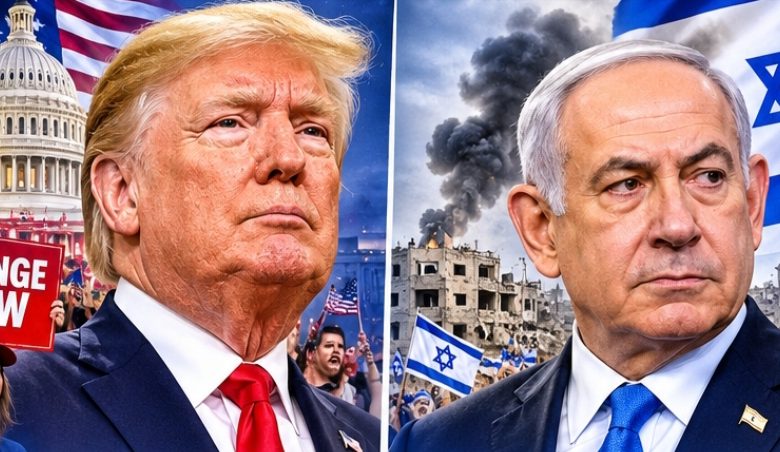
Two of the world’s most closely watched democracies have delivered a sharp rebuke to their incumbent leaders within days of each other. In the United States, voters handed both chambers of Congress to the Democrats in the November 3 midterm elections. In Israel, voters denied Prime Minister Benjamin Netanyahu a parliamentary majority in the October 27 election for the 26th Knesset, producing a hung parliament and a record role for Arab-led parties.
The results do not have a single cause. Polls and exit polls show the cost of living was the No.1 issue in America, with the US-Israeli war on Iran, tariffs, corruption and democratic norms close behind. In Israel, war fatigue, the cost of living, the judicial overhaul, the October 7 inquiry and anger over prolonged war in Gaza shaped the vote.
1. AMERICA: DEMOCRATS FLIP HOUSE AND SENATE
Democrats seized control of both the Senate and House on Tuesday, scoring sweeping victories in Republican strongholds for the first time in generations as tens of millions of voters delivered a scathing rebuke to President Donald Trump.
The Associated Press called the House for the Democrats after the party surpassed 218 seats, and the Senate after Democrats flipped Republican seats in North Carolina, South Carolina, Ohio, Texas, Kansas and Iowa, clearing the key 51-seat threshold in the 100-seat chamber.
Later tallies put Democrats at 54 Senate seats and 228 House seats counted so far, with leads in more races. In the House, Democrats could end up with in excess of 260 seats, the party’s biggest strength since 1990.
Historic breakthroughs included Kansas electing its first Democratic senator since the Great Depression, South Carolina electing a Democrat despite Trump having carried the state by nearly 18 points in 2024, and Texas electing a Democratic senator and ousting three-term Governor Greg Abbott. In Michigan, Abdul El-Sayed became America’s first Muslim senator.
President Trump, who is barred by the Constitution from seeking a third term, accepted the outcome and congratulated Democrats in an interview with Fox News. The new Congress will not formally take office until January 3, 2027.
Why Voters Turned Against Trump?
a) Cost of Living and Gas Prices – The Decisive Factor
Some 48% of registered voters in a Reuters/Ipsos poll said the cost of living is the top issue for deciding how they will vote, compared with 26% who said democratic norms and 13% who point to immigration.
About two-thirds of voters said Trump’s policies have worsened economic conditions in the U.S., while only about 3 in 10 said they’ve improved things. Similarly, about two-thirds said Trump’s tariff policies have hurt the national economy.
Gas prices have spiked since the US and Israel launched military strikes on Iran in February. The national average price of gas is $4.28 – $1.20 higher than it was a year ago. By mid-September, diesel hit a record near $6.40 a gallon and gasoline averaged above $4.40.
A Harris Poll found 61% of Americans believed the country was effectively in a recession. cf6c
b) The Iran War – From Foreign Policy To Kitchen Table Issue
The US and Israel attacked Iran on February 28, and Iran responded with strikes on Israel and Gulf states that host US bases. Tehran shut the Strait of Hormuz, the world’s most vital energy conduit, which sent oil prices across the world skyrocketing.
About 6 in 10 voters say the U.S. made the “wrong decision” in taking military action against Iran. The cost of the war has risen to more than $47.1 billion, according to a recent estimate from the Pentagon.
Exit polling showed 74% of voters called the Iran war a “crucial” or “major factor” in their vote, and 62% said using force was the wrong decision. In Reuters/Ipsos, only 25% of voters think military action has been worth the cost, and 55% say it has not been worth it.
Trump himself acknowledged in interviews that the US-Israeli war played a role in Republican defeats. He told Fox News: “I think a part of it was Iran, but at the same time, people understood the importance of what I’ve done with Iran.”
Iran’s Parliament Speaker Mohammad Baqer Qalibaf posted: “Conscience or the cost of living, Americans said NO TO WAR, and we endorse this message.”
c) Gaza – A Moral Issue For Key Voting Blocs
While Gaza ranked below cost of living and Iran in overall exit polls, it was decisive for Muslim, Arab-American and young voters.
A Council on American-Islamic Relations survey of 861 American Muslims found 84 percent dissatisfied with Trump’s performance and only 6 percent satisfied. Also, 72 percent said they intend to vote for Democratic candidates. According to the same survey, 89 percent considered the candidates’ position on Gaza a very important or extremely important factor in their electoral decision.
In Michigan, where opposition to the US-Israeli war against Iran and anger over Washington’s support for Israeli war in Gaza remain politically sensitive, Muslim and Arab American voters could prove particularly consequential.
For some Jewish voters too, the unprecedented Democratic backlash against Israel’s conduct in Gaza was reason enough to cross party lines for the first time.
Casualty figures cited in international reporting remain contested and vary by source. By late 2025, the Gaza Health Ministry reported at least 70,117 Palestinians had been killed since the war began, with civilians forming the overwhelming majority. Israeli forces have continued attacks across Gaza despite a US-brokered “ceasefire” taking effect in October 2025, killing more than 1,500 people since the agreement began, according to Al Jazeera’s reporting of local sources. Israel maintains its operations target Hamas positions.
d) Anti-Trump Referendum
Three-quarters of US voters said they were “angry” or dissatisfied with the country’s direction, and 70% wanted Congress to provide more “checks” on him. Half of voters told exit pollsters they saw the election as a chance to rebuke President Donald Trump. A Pew survey found only 30% approved of his performance, while 68% disapproved. 98fccf6c
2. ISRAEL: NETANYAHU LOSES MAJORITY, HUNG KNESSET
The Result – Certified November 4
Israel’s Central Elections Committee has certified the results of last week’s parliamentary elections after finding no evidence of fraud, a blow to Prime Minister Benjamin Netanyahu’s efforts to discredit the vote.
The final tally for the 120-seat Knesset:
– Netanyahu-led bloc: 53 seats – Likud remains largest party with 27 seats
– *Eisenkot-led opposition bloc: 48 seats – Yashar with 21 seats, Bennett’s B’Yachad with 12
– Arab-led parties: Record 19 seats – Joint List 11, Ra’am 8
Neither could attain the majority – 61 seats – needed to govern. The final voter turnout was 77.7%, up 7.1% from the 2022 election.
President Isaac Herzog received the official results on November 4 and will hold two days of consultations before choosing the candidate best placed to form a coalition. Opposition leaders have agreed to back former military chief Gadi Eisenkot as prime minister. Netanyahu has called for a “broad national government” and claims a clear majority of the Jewish public chose Likud as the largest party.
Netanyahu and his allies have repeatedly claimed, without evidence, that Arab-led parties “stole” the election, possibly with foreign help. The committee said a review of 9,069 polling stations found no irregularities that compromised the integrity of the election.
Why Voters Turned Against Netanyahu?
a) War Fatigue And The October 7 Failure
Opposition parties are already coordinating efforts to replace Knesset Speaker Amir Ohana, while Eisenkot has pledged to use the parliamentary majority to establish a state commission of inquiry into the October 7, 2023, Hamas-led attacks. The attack killed approximately 1,200 people in Israel and abducted about 250 hostages.
The six parties opposed to Netanyahu won a combined 67 of the Knesset’s 120 seats, compared to 53 for the premier’s Likud and its far-right and ultra-Orthodox partners. This means Netanyahu lost his parliamentary majority even if no single opposition coalition has yet formed.
b) Gaza War And Its Human Cost
Protests in Jerusalem have escalated against the escalation of military action in Gaza and the proposed dismissal of the head of the internal security service. Thousands gathered in Jerusalem to voice their opposition to the proposed dismissal and the escalation in Gaza.
In Israel, younger voters in particular show frustration and fatigue after years of war. Generation Z faces housing costs and uncertainty, and most grew up under Netanyahu’s government and have not seen an Israel led by another prime minister. One 27-year-old Tel Aviv resident said: “When it comes to loss of life, any war must be condemned. It doesn’t matter if you support the right or left, war is to be questioned.”
At the same time, other Israelis support continuing the war. A 53-year-old reservist said Iran will target everyone in the future and Israel is in the front line. A mother who lost her son in Gaza in 2024 said: “We have to finish the job.” This split explains why the election produced a hung parliament rather than a clear opposition landslide.
c) Arab Voters Become Kingmakers
Arab-led parties won a record 19 seats, giving them a potentially decisive role. A coalition of Arab parties with Eisenkot would provide a comfortable majority of 67 in parliament. However, the opposition remains split on whether to work with Arab-led parties. Yair Golan backs an alliance, but Avigdor Liberman firmly opposes it.
d) Judicial Overhaul And Corruption
Eisenkot has also pledged to repeal the outgoing government’s judicial overhaul legislation, and introduce mandatory military or national service for all Israelis. Netanyahu also faces corruption charges and political uncertainty as rivals seek to oust him.
3. WHAT HAPPENS NEXT?
In Washington:Democrats, once seated in January, are expected to use their power to investigate Trump’s administration, family and allies and demand concessions on major legislation. The Democratic Senate can block Trump’s nominees, including any US Supreme Court justices should a vacancy arise.
Mediators have intensified efforts to end the Iran war amid fears it could reignite after the election, with Trump declining to rule out a resumption of combat operations.
In Jerusalem: If no one is able to form a governing coalition, Israel would hold another election early next year. The new Knesset is set to convene on November 10.
The Common Thread: In both countries, voters did not vote only on foreign policy. They voted on prices at home, on whether war was worth its cost, on trust in leadership, and on who should check power. The Iran war turned a distant conflict into higher fuel, food and shipping costs. The Gaza war turned a moral debate into a voting issue for minorities, youth and progressive voters. Together, they produced a double rebuke – in Washington, a Democratic Congress; in Jerusalem, a Netanyahu without a majority.
Note for publication: Casualty figures for Gaza and Iran are from different sources and are disputed. This report attributes figures to their sources and does not present any single figure as independently verified by UKnationnews.