Will Our Films Ever Become ‘Uttarakhandi Cinema’? Four Decades of a Cinema Still Searching for Its Soul



By Suresh Nautiyal Greenananda
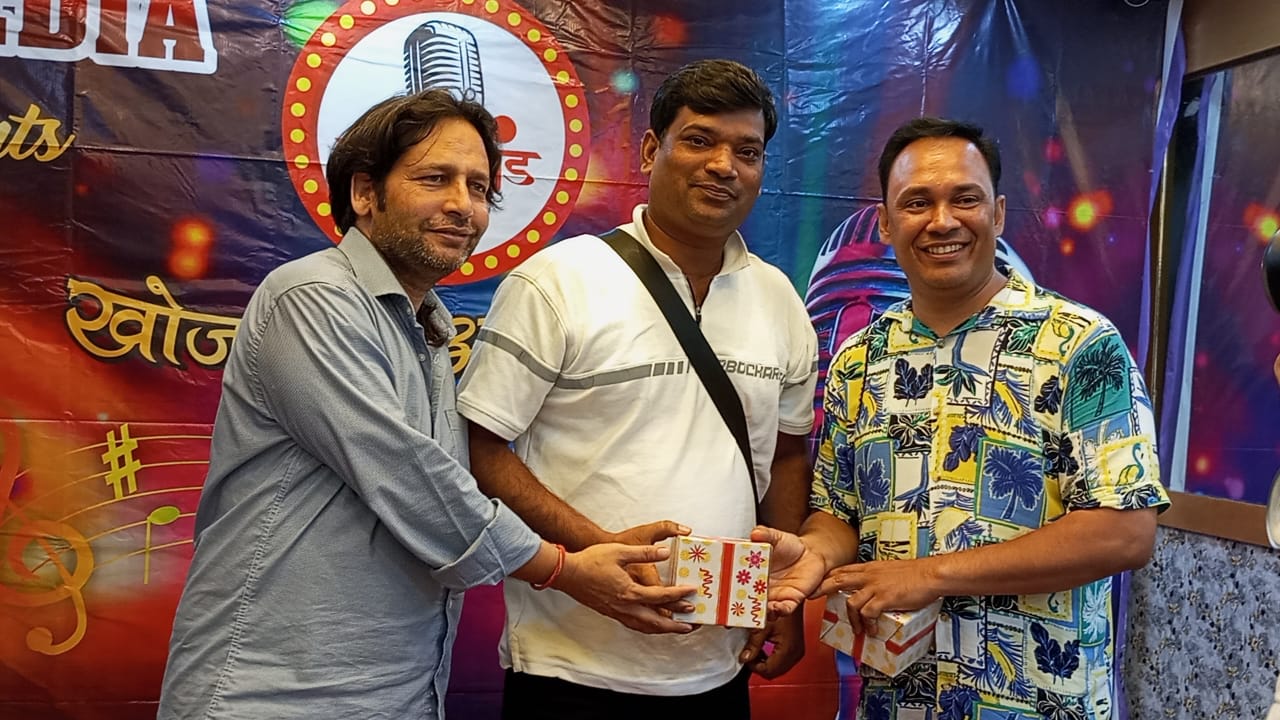
On 30 August 2026, the 14th edition of the Young Uttarakhand Cine Awards (YUCA) will open at Bharat Mandapam in New Delhi. The event will be presented as a celebration of Uttarakhand’s film, music and creative talent. Launched in 2009, YUCA has established itself as a recurring platform for the regional entertainment industry.
For sure, it is an occasion for celebration. But it should also be an occasion for introspection. Because this year YUCA arrives at a particularly interesting moment. On 18 July 2026, Dholi, a Garhwali feature film directed by Dinesh Bhonsle, won the Rajat Kamal (Silver Lotus) for Best Garhwali Film at the 72nd National Film Awards. The official award announcement places Dholi in the category of Best Feature Film in languages other than those specified in the Eighth Schedule of the Constitution.
The achievement is historic. It deserves celebration.
But it also gives us a reason to ask an even more fundamental question: Has Dholi pushed Uttarakhandi films closer to becoming Uttarakhandi cinema—or has it merely proved that one Uttarakhandi-language film can win a national award?
After more than four decades of filmmaking, we must ask a simple question: Do we really have an Uttarakhandi cinema—or do we merely have films made in Garhwali, Kumaoni and other Uttarakhandi languages?
The distinction is important.
A film does not become regional cinema merely because its dialogues are in a regional language, its actors wear traditional clothes or its camera captures mountains.
Cinema becomes the cinema of a people when it begins to understand, interpret and imaginatively represent their society.
That is the point at which the history of Uttarakhandi cinema must be reconsidered.
THE EXTRAORDINARY BEGINNING: JAGWAL
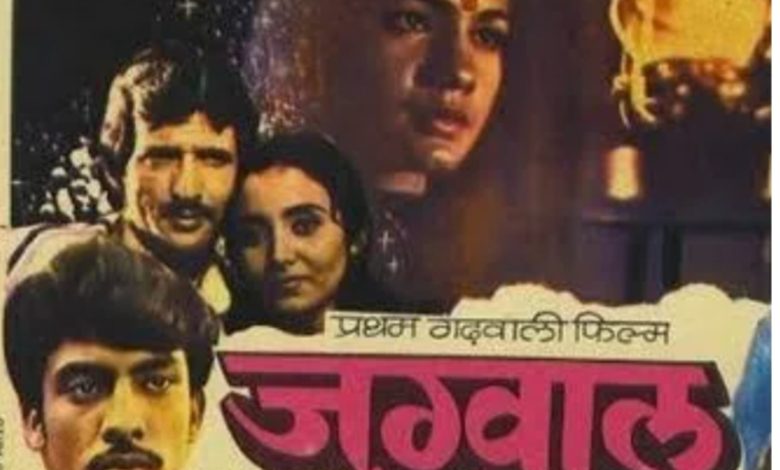
The story begins with Parashar Gaur’s Jagwal in 1983. Its Delhi premiere at Mavalankar Hall became a landmark moment. The film, made in Garhwali, had taken time to reach the screen and had no conventional distribution network waiting for it. Yet audiences arrived in large numbers. Contemporary documentation records the premiere as an event that inaugurated the modern Uttarakhandi regional film industry.
What made Jagwal historically important was not simply that it was the first Garhwali feature film. It arrived at a moment when the people of the mountains were increasingly asserting a cultural identity that had long remained fragmented and politically marginalised.
Theatre, folk performance, songs and poetry had already prepared the ground. From the 1960s through the 1980s, artists, singers, poets and theatre workers were using cultural expression to articulate the social and economic anxieties of the Himalayan region. That cultural awakening eventually intersected with the Uttarakhand statehood movement.
Thus, Jagwal was more than a film. It was an assertion: “We too have a language. We too have stories. We too can see ourselves on the screen.” That psychological breakthrough should never be underestimated.
FROM ONE FILM TO A MOVEMENT OF FILMS
The years that followed produced genuine excitement. Kabi Sukh Kabi Dukh (1984), Ghar Jawain (1986), Kauthig (1987), Megha Aa (1987) and Raibar (1990) were among the films that followed the pioneering beginning. The first decade therefore produced both Garhwali and Kumaoni cinema, with Megha Aa marking an early landmark for Kumaoni-language filmmaking.
The 1990s brought films such as Bantwaru, Phyunli, Beti Bwari and Chakrachal. The following years saw Teri Saun, Aunsi Ki Raat, Meri Ganga Holi Ta Memu Aali and Cheli, among others.
There were quantity, enthusiasm and cultural ownership. But something else was becoming visible: the absence of a sustainable cinematic ecosystem.
Production remained largely dependent on individual producers. Distribution was weak. Exhibition opportunities were limited. Many films were unable to recover their costs. Technical departments were often under-resourced, and filmmaking was frequently approached as an extension of theatre, music albums or commercial Hindi cinema rather than as a distinct cinematic art.
The dream had begun. The industry had not started flourishing.
TERI SAUN: WHEN CINEMA BECAME HISTORICAL MEMORY
One of the more significant departures came with Anuj Joshi’s Teri Saun (2003). The film attempted something that regional cinema ought to do naturally: it looked at Uttarakhand’s own political history. Set against the statehood movement and the trauma surrounding the events of 1994, it was made in both Garhwali and Kumaoni and sought to speak to the wider cultural geography of the proposed state.
This was significant because it demonstrated that Uttarakhand possessed stories larger than village romance, family conflict and comic situations. That our history itself could become cinema. That our migration could become cinema. And, our forests, rivers, women, soldiers, ecological crises, unemployment, changing villages and disappearing traditions could become cinema.
The question was whether filmmakers would have the courage and cinematic competence to tell those stories.
THEN CAME DHOLI
And now, in 2026, comes Dholi. The film has done something no Uttarakhandi-language feature had done before: it has brought a Garhwali feature film to the Rajat Kamal for Best Garhwali Film at the National Film Awards. The official Ministry of Information and Broadcasting list identifies Dholi as the Best Garhwali Film, with producer SC Pharmachem Pvt. Ltd. and director Dinesh Bhonsle as the awardees.
The Uttarakhand Governor called the recognition a historic moment for Uttarakhand and its film industry, noting that it brings national recognition to the state’s folk culture, language and artistic heritage.
That is no small achievement.
For a regional filmmaker working outside the dominant Hindi-film establishment, a National Film Award can change the psychological landscape.
For decades, Uttarakhandi filmmaking has struggled with the perception that regional films are necessarily small films, amateur films or films meant primarily for an audience of Uttarakhandis living in Delhi, Dehradun, Mumbai and elsewhere.
Dholi challenges that assumption. It says something important: A film rooted in Uttarakhand, made in a Uttarakhandi language, can enter the national cinematic conversation.
But here we must be careful. One National Award does not create a cinema. Dholi is a milestone. It is not yet a movement. It has opened the door. It has not taken Uttarakhand through the door. And this distinction matters enormously. A single film can win an award. Ten films can create a trend.
A hundred films can create an industry.
But a sustained body of films with a distinctive aesthetic, social consciousness, cinematic language, institutional ecosystem and critical culture creates a cinema. The achievement of Dholi, therefore, should not end the debate. It should begin a more serious one. The question is no longer whether a Uttarakhandi film can win national recognition. Dholi has answered that.
The question remains whether Uttarakhand can turn this moment of recognition into a sustained cinematic tradition.
FROM DHOLI TO UTTARAKHANDI CINEMA
There is another important distinction.
The National Film Award has honoured Dholi as Best Garhwali Film, not as “Best Uttarakhandi Film.” This is not a problem. It is a reminder. Uttarakhand is culturally larger than Garhwal.
A genuine Uttarakhandi cinema must have room for Garhwali, Kumaoni, Jaunsari and other linguistic and cultural traditions. It should not erase their differences in the name of a manufactured uniformity. Garhwali should remain Garhwali. Kumaoni should remain Kumaoni. Jaunsari should retain its own cultural character.
Yet all of them can belong to a wider cinematic imagination because the people of these regions share historical, ecological, political and social experiences.
The term Uttarakhandi cinema, therefore, should function as an inclusive cultural umbrella—not as a substitute for linguistic identity. Teri Saun offered one early example of this larger possibility by bringing Garhwali and Kumaoni into the same cinematic project.
Dholi now offers another possibility: that a film deeply rooted in one linguistic-cultural tradition can achieve recognition far beyond that immediate community. The next step is to see whether such achievements can accumulate.
THE PROBLEM WAS NEVER A SHORTAGE OF STORIES
This is perhaps the greatest irony.
Uttarakhand has no shortage of cinematic material. It has an extraordinary landscape, but landscape alone is not cinema. It has mythology, but mythology alone is not cinema. It has folk songs, festivals, legends and traditions, but merely reproducing them does not create great cinema. The real treasure lies in the human stories beneath them.
Consider migration.
Millions of Uttarakhandi people have experienced the emptying of villages and the transformation of mountain society. Consider the women who remain behind and sustain households and agriculture. Consider forests and the long history of ecological resistance. Consider soldiers and ex-servicemen. Consider seasonal migration, tourism, hydropower, disasters, changing agriculture, land abandonment, youth unemployment and the erosion of language.
These are not peripheral subjects. They are the dramatic heart of contemporary Uttarakhand. Yet much of our cinema has repeatedly preferred formulas borrowed from elsewhere.
THE BOLLYWOOD MIRROR
The most persistent problem is not poverty of resources but poverty of imagination.
Veteran theatre personalities and cultural observers have repeatedly criticised Uttarakhandi films for weak scripts, artificial acting, repetitive narratives and inadequate cinematic craftsmanship.
Singer and lyricist Narendra Singh Negi has particularly objected to the tendency to reproduce crude Bollywood formulas in Himalayan settings. The problem becomes especially serious when filmmakers transplant Mumbai-style violence, melodrama and characterisation into mountain societies where social relationships operate according to very different codes.
A man carrying a pistol through a Garhwali village does not automatically make a story cinematic. A heroine wearing a pichhaura does not automatically make a film Uttarakhandi. A few chholiya or dhol-damau sequences do not create regional cinema. And shooting against the Himalayan mountains does not make a film Himalayan. The mountains must enter the story, not merely the frame.
That is perhaps the greatest lesson our filmmakers need to learn.
LANGUAGE IS NECESSARY—BUT NOT SUFFICIENT
A Garhwali film is not necessarily Uttarakhandi cinema. A Kumaoni film is not necessarily Uttarakhandi cinema. Nor should the two linguistic traditions be forced into an artificial homogenisation. Garhwali and Kumaoni have their own histories, sounds, idioms and cultural worlds. Jaunsari and the other linguistic traditions of Uttarakhand add further layers to the state’s cultural diversity.
Language is an essential part of identity. But language alone cannot create cinematic identity. The deeper question is: What does the film see? What does it understand? Whose life does it enter? What truth does it reveal? A film can speak perfect Garhwali and still tell a story borrowed from Mumbai.
Another can use a multilingual form and yet reveal something profoundly Uttarakhandi about migration, ecology, memory, gender, caste, displacement or mountain society.
That is why Dholi should not be reduced merely to the fact that it is in Garhwali. Its importance lies in the possibility that a film emerging from a specific cultural world can speak beyond its linguistic boundaries.
THE STATE RECOGNISES CINEMA AS AN INDUSTRY
There is, however, reason for cautious optimism.
The Uttarakhand Film Policy 2024 explicitly seeks to promote regional films, including films made in the state’s local languages and dialects. The policy places film within a wider framework of employment, local artistic participation, tourism, infrastructure and investment, and provides for grants and incentives.
The present subsidy guidelines also introduce more concrete requirements. Films seeking assistance must meet prescribed eligibility conditions; substantial shooting in Uttarakhand must be demonstrated; geo-tagging and behind-the-scenes documentation are required; theatrical films need distributor certification; and technical standards such as 4K resolution and Dolby Digital sound are specified. Selected OTT releases are also brought within the subsidy framework.
This is a considerable institutional change from the era when individual enthusiasts had to struggle simply to get a regional film made and exhibited.
But policy by itself will not create cinema.
Money can purchase cameras. It cannot purchase a good screenplay. A subsidy can finance production. It cannot manufacture a filmmaker.
WHAT KIND OF INSTITUTIONAL SUPPORT DO WE NEED?
The state should therefore move beyond a subsidy mentality.
Instead of merely reimbursing producers after films have been made, Uttarakhand needs an independent, professionally governed film institution capable of identifying promising scripts, supporting development, training young filmmakers, maintaining archives, facilitating production and helping films reach festivals, theatres and digital platforms.
The existing policy framework already recognises the importance of an Uttarakhand Film Development Council. The challenge is to ensure that such institutions function transparently and at arm’s length from political influence.
Public money should not be distributed simply because a film has been produced. It should support good cinema in the making.
Script development, research, workshops, cinematography, editing, sound design and post-production deserve support alongside production.
The state’s role should be to create conditions in which talent can grow—not to manufacture certificates of cinematic success.
YUCA: CELEBRATION, BUT ALSO A RESPONSIBILITY
This is where YUCA acquires particular significance.
Since its launch in 2009, the Young Uttarakhand Cine Awards has developed into a recurring platform for recognising artists associated with Uttarakhand’s film and music culture. Its 14th edition on 30 August 2026 at Bharat Mandapam is therefore more than another award ceremony.
And this year, after Dholi’s National Award, YUCA has an opportunity to ask a larger question.
Awards carry a responsibility. If every film is celebrated merely because it is Uttarakhandi, the award loses its meaning. We should celebrate our artists without lowering our artistic standards.
The question should not merely be: “Is this film ours?”
It should also be: “What has this film contributed to cinema?”
Has it told a compelling story?
Has it created believable characters?
Has it captured a part of Uttarakhand that would otherwise disappear?
Has it experimented with cinematic language?
Has it treated Garhwali, Kumaoni or another local language with authenticity?
Has its cinematography interpreted the landscape rather than merely photographed it?
Has its editing created rhythm?
Has its soundscape listened to the mountains?
Has its music grown organically from the story?
These are the questions that should accompany every award.
And perhaps Dholi itself should be treated not as the conclusion of this conversation but as its most compelling invitation.
FROM SCENERY TO SOCIETY
For decades, outsiders have come to Uttarakhand to photograph its mountains.
Our cinema must do something different.
It must interpret the mountains.
The Himalayan landscape is not a tourist postcard.
It is a living social world.
A forest is not merely a beautiful background. It is about livelihood, memory, conflict and ecological security.
A river is not simply something flowing behind the hero. It is water, displacement, pilgrimage, disaster and survival.
A village is not merely a collection of picturesque houses. It contains caste, gender, migration, ageing, memory, aspiration and loneliness.
A woman walking miles with a bundle of grass is not a visual prop.
She is the protagonist.
A young man leaving his village for Delhi is not merely part of a migration statistic. He is a cinematic character carrying an entire civilisation within him.
This is where Uttarakhandi cinema must go.
DIGITAL TECHNOLOGY HAS CHANGED THE POSSIBILITIES
The technological landscape is also very different from 1983.
The early filmmakers had to fight for film stock, processing, exhibition and physical distribution. Today relatively inexpensive digital cameras, editing systems and online platforms have lowered several barriers to production and circulation.
But democratisation of technology has not automatically produced democratisation of cinematic quality.
A mobile phone can make a film.
It cannot tell the filmmaker what deserves to be filmed.
Digital access must therefore be accompanied by education in screenplay writing, direction, cinematography, editing, sound and film appreciation.
Our young filmmakers need to watch more than Bollywood. They need to discover Satyajit Ray, Ritwik Ghatak, Adoor Gopalakrishnan, Shyam Benegal, Kumar Shahani, Mani Ratnam and contemporary Indian filmmakers, but also Kurosawa, Bergman, Tarkovsky, Iranian cinema, Latin American cinema and the great regional cinemas of the world.
A filmmaker cannot discover a cinematic language without first learning the languages of cinema.
THE RAY LESSON
The history of Pather Panchali remains instructive. Great cinema does not always emerge from wealth. Sometimes it emerges because somebody is willing to believe in a story before the market does. That is precisely why institutional support matters.
But institutional support must be accompanied by artistic accountability. If the government pays, filmmakers must deliver quality. If audiences support, filmmakers must respect that trust. If awards recognise, juries must uphold standards. If critics praise, they must do so honestly. And if a film fails, we must be mature enough to say that it has failed. Love for one’s culture should never become an excuse for mediocrity. The honest answer is:
We have the beginnings of it. We have a history of it. We have a body of films that can be called Uttarakhandi cinema. But we have not yet fully realised its cinematic potential.
And Dholi does not invalidate that conclusion. On the contrary, it strengthens the argument. Because Dholi proves that Uttarakhandi filmmaking is capable of reaching the national level. What it has not yet proved is that Uttarakhand possesses a sustained cinematic culture. There is a difference between possessing a film industry and possessing a cinematic culture.
An industry produces films.
A cinematic culture produces filmmakers. It develops schools of thought, recurring artistic concerns, distinctive visual language, memorable characters and a critical conversation around cinema.
Bengali, Malayalam, Tamil, Marathi, Kannada and Telugu cinemas became influential not merely because they used their own languages. They developed filmmakers who understood their societies and transformed that understanding into cinematic form.
That is the leap Uttarakhand has yet to make consistently. And perhaps Dholi gives us the confidence to attempt it.
THE QUESTION YUCA SHOULD ASK
Therefore, as YUCA prepares for its 14th edition, perhaps the most useful question is not: “Who will win the next award?”
It is: “What kind of cinema do we want to build by the time YUCA reaches its 20th edition?”
Do we want an industry producing dozens of forgettable films?
Or do we want a smaller but serious body of films capable of travelling beyond Uttarakhand?
Do we want films made only for Uttarakhandis living in Delhi, Dehradun and Mumbai?
Or do we want films that allow people in Delhi, Kolkata, Mumbai, Tokyo, Paris and New York to discover Uttarakhand through our own eyes?
Do we want to keep imitating Bollywood?
Or do we finally want to discover our own cinematic grammar?
The answer will determine whether Uttarakhandi cinema remains a sentimental cultural category—or becomes a respected cinematic tradition.
More than forty years after Jagwal, we should no longer be satisfied merely because a Garhwali or Kumaoni film has been made. That was enough in 1983. It is not enough in 2026. And Dholi has now raised the bar.
The first generation proved that we could make films. Dholi has proved that one of those films can win national recognition. The next generation must prove that we can make cinema.
And perhaps that is the real promise of Uttarakhand’s future filmmakers: to stop asking whether others will recognise our cinema and begin creating work so truthful, so distinctive and so artistically accomplished that recognition becomes inevitable.
The day our films cease to imitate the mountains and begin to understand them, Uttarakhandi films will finally become Uttarakhandi cinema.