Uttarakhand: Safeguarding the Soul of the Himalayas


– By Suresh Nautiyal Greenananda
Uttarakhand is not merely a state, a geographical territory or a collection of mountains and valleys. It is a civilisational landscape where nature, culture, spirituality and community have evolved together over centuries. Its forests, rivers, springs, terraces, villages, temples, languages, folk songs, festivals, food, architecture and social traditions constitute an intricate cultural-ecological system.
Today, that system is under threat.
We speak frequently about deforestation, disappearing springs, climate change, landslides, pollution, unplanned construction, shrinking agriculture and migration. But beneath these visible crises lies another, quieter crisis—the erosion of Uttarakhand’s cultural identity and confidence.
Traditional Uttarakhandi culture was never merely a collection of customs. It was an accumulated knowledge of how to live within the limitations and possibilities of the Himalaya. Forests were sources of food, fodder, fuel, medicine and water. Rivers and springs were revered as life-givers. Terraced agriculture reflected an intimate understanding of soil and slopes. Houses were adapted to climate and locally available materials. Food habits followed seasons and local biodiversity. Festivals connected people with nature, agriculture, ancestors and one another.
In other words, culture was ecological wisdom made into a way of life.
That wisdom is rapidly disappearing.
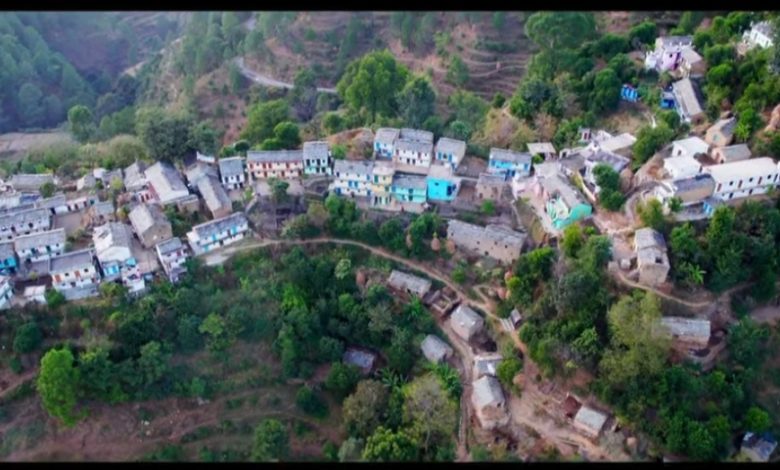
Migration has emptied or weakened thousands of villages. When people leave, it is not only houses and fields that are abandoned. Languages, songs, oral histories, agricultural knowledge, traditional seeds, food practices, rituals, craftsmanship and community institutions also begin to disappear. A deserted village is therefore not simply an economic statistic; it is a fragment of civilisation falling silent.
The weakening of local languages is particularly serious. Garhwali, Kumaoni, Jaunsari and other indigenous languages carry concepts, memories, humour, folklore, ecological knowledge and ways of seeing the world that cannot always be translated into another language. When a language dies, a worldview dies with it.
Women deserve special recognition in this cultural inheritance. For generations, Uttarakhand’s women have been custodians of seeds, food traditions, forests, livestock, songs, rituals, water sources and household ecological knowledge. Much of what we now call “traditional knowledge” survived because women carried it from one generation to another.
Yet, paradoxically, we increasingly treat our own inheritance as inferior.
Mainstream, urbanised and commercially driven culture has entered the mountains with enormous force through television, cinema, social media, advertising, tourism and consumer markets. Cultural interaction is not inherently harmful; cultures have always influenced one another. The danger begins when interaction becomes replacement, and when one homogenised cultural model is presented as the definition of modernity.
Our festivals illustrate this transformation.
Many local festivals once expressed agricultural cycles, seasons, community relationships, spirituality and reverence for nature. Increasingly, celebrations are becoming spectacles of consumption—loud music, excessive lighting, disposable decorations, plastic, commercial stalls and conspicuous expenditure. Festivals promoted by mass culture can gradually overshadow lesser-known local traditions.
This is not simply a cultural issue. It affects public life and the fragile Himalayan environment. More consumption means more waste. More vehicles mean more congestion and pollution. More concrete construction means greater ecological disturbance. Noise and commercialisation alter the character of villages and sacred spaces. The mountain is being asked to consume, accommodate and dispose of far more than its fragile ecology can sustain.
Tourism presents another paradox. Tourism can provide employment and revive local economies, but unregulated mass tourism can turn sacred places, festivals, rivers and mountains into commodities. A culture that exists only to entertain visitors is no longer a living culture; it has become a performance.
Our traditional architecture is also disappearing. Concrete buildings, often poorly suited to mountain conditions, are replacing houses designed with local materials and climatic wisdom. The transformation is not merely aesthetic. We are replacing generations of accumulated knowledge with models imported from plains and cities, often without asking whether they belong in the mountains.
Consumerism is perhaps the most powerful force behind this transformation. Traditional mountain society evolved under conditions of scarcity. It valued restraint, repair, reuse, sharing and careful use of natural resources. Consumer culture teaches almost the opposite: acquire more, display more, discard more and constantly desire something new.
But the deepest problem may be psychological.
We have begun to believe that what comes from elsewhere is modern while what comes from our own mountains is backward; that an unfamiliar local festival is insignificant while a commercially popular celebration is prestigious; that packaged food is superior to traditional food; that speaking a metropolitan language is sophisticated while speaking one’s mother tongue is embarrassing.
This cultural inferiority complex may be more destructive than outside cultural influence itself.
We must therefore not preserve Uttarakhand’s culture as a museum preserves an artefact. A living culture must be allowed to evolve. But evolution should not mean losing its soul.
We need a cultural renaissance rooted in ecological wisdom. Local languages must enter schools and public life. Folk literature, music, theatre, crafts, oral histories and traditional knowledge must be documented and transmitted to younger generations. Indigenous seeds, food systems, architecture and water traditions should be revived. Festivals should recover their ecological and community meanings. Tourism must become responsible and locally rooted. Development policies must respect the carrying capacity of the mountains and the participation of mountain communities.
Above all, Uttarakhand must regain confidence in itself.
Modernity does not demand cultural amnesia. Development does not require ecological destruction. Progress does not require abandoning one’s identity.
The Himalaya cannot be protected merely through environmental laws while its people become disconnected from the cultural knowledge that historically enabled them to live within it.
To save Uttarakhand’s forests, rivers and mountains, we must also save the memory, knowledge, languages, traditions and values that bind its people to them.
We must not merely preserve the mountain as a landscape. We must preserve the mountain as a living civilisation—and as a way of life.
Coming Soon