
 SUNIL NEGI
Haldwani: The BJP’s extended state working committee meeting in Haldwani may have been formally devoted to organisational strengthening and preparations for the 2027 Uttarakhand Assembly elections, but the conspicuous prominence accorded to state party in-charge Dushyant Kumar Gautam has raised a larger political question: does the BJP leadership believe that the controversy surrounding his name in the Ankita Bhandari case has any electoral consequences for the party?
Gautam, whose name has repeatedly surfaced in social-media allegations allegedly surrounding the controversial “VIP” reference in the Ankita Bhandari murder case, was given a warm reception when he arrived at the venue with his entourage.
The allegations against him have been vehemently denied. He has himself approached the courts over what he describes as defamatory material, and the Delhi High Court has restrained several defendants from circulating content identifying him as the alleged VIP.
Yet the political optics in Haldwani were striking.
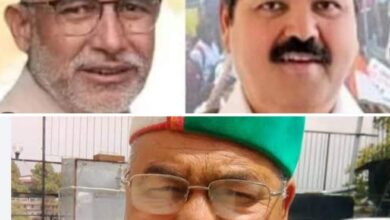
Gautam was publicly welcomed and accorded prominence at a gathering attended by BJP national president Nitin Nabin, Chief Minister Pushkar Singh Dhami, state BJP president and Rajya Sabha MP Mahendra Bhatt, former Chief Minister and Rajya Sabha MP Tirath Singh Rawat and other senior party leaders. Reports from the venue also indicate that Gautam participated in the opening proceedings alongside senior leaders.
According to the account from the meeting, Bhatt asked party workers to apply a tilak to Gautam’s forehead and subsequently brought him onto the stage with honour. Whether deliberate or not, the symbolism was unmistakable: Gautam was not being kept at arm’s length from the party’s top leadership in a state that is scheduled to face voters in 2027.
This becomes politically significant because the Ankita Bhandari murder continues to occupy a sensitive place in Uttarakhand’s political discourse.
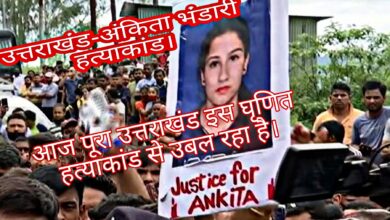
The 19-year-old receptionist was murdered in 2022 at the Vanantra Resort, and the case generated enormous public outrage. The recent controversy over the identity of the alleged “VIP” has revived political debate, despite Gautam’s denial and the judicial proceedings concerning the social-media allegations.
The BJP’s organisational message in Haldwani, meanwhile, was unmistakably election-oriented.
Nitin Nabin called upon workers to prepare at the booth level and declared that the party was working towards forming the government for a third consecutive term.
He pointed to the BJP’s extensive organisational network in Uttarakhand—19 organisational districts, 304 mandals, 2,835 Shakti Kendras and 12,543 booths—and urged workers to convert that structure into electoral strength.
The meeting also discussed a political resolution, the “Viksit Uttarakhand” pledge and organisational issues.
The BJP leadership emphasised coordination among functionaries and wider dissemination of government welfare schemes.
N abin’s political message was equally aggressive. He accused the Congress of appeasement politics and attacked it over the Haldwani “purification” controversy, while asserting that Uttarakhand voters would reject what he described as divisive politics.
Against this backdrop, Gautam’s prominent treatment at the very same meeting assumes significance.
If the BJP’s national leadership genuinely believed that Gautam’s continued association with Uttarakhand could damage the party’s prospects in 2027, Haldwani would have provided an obvious opportunity to create political distance. Instead, the public optics suggested the opposite.
The message, therefore, appears to be that the BJP leadership does not presently regard the allegations surrounding Gautam as an organisational liability—or at least does not believe that they warrant removing him from his role as Uttarakhand in-charge.
That raises a second question: will the opposition succeed in turning the Ankita Bhandari controversy into an electoral issue in 2027, or will the BJP’s organisational machinery and its development narrative succeed in pushing it to the margins of the campaign?
The answer may ultimately depend not on what happens inside BJP meetings, but on how strongly the issue resonates with Uttarakhand’s voters.
For now, however, Haldwani conveyed one unmistakable political message: Dushyant Gautam remains firmly within the BJP’s Uttarakhand organisational framework, and the party leadership appears prepared to stand publicly alongside him as it begins its campaign for 2027.
Conclusively the Haldwani meeting was much more explicitly an election-preparation exercise where national BJP chief Nabin’s booth-level mobilisation message and his assertion that BJP would return to power in 2027 make the Gautam optics more politically significant.