DRDE TRANSFERS INDIGENOUS HPBD WASTE TREATMENT TECHNOLOGY TO DAIKI AXIS ENVIRONMENT IN SIGNIFICANT LATOT AGREEMENT

Gwalior/New Delhi, July 2026

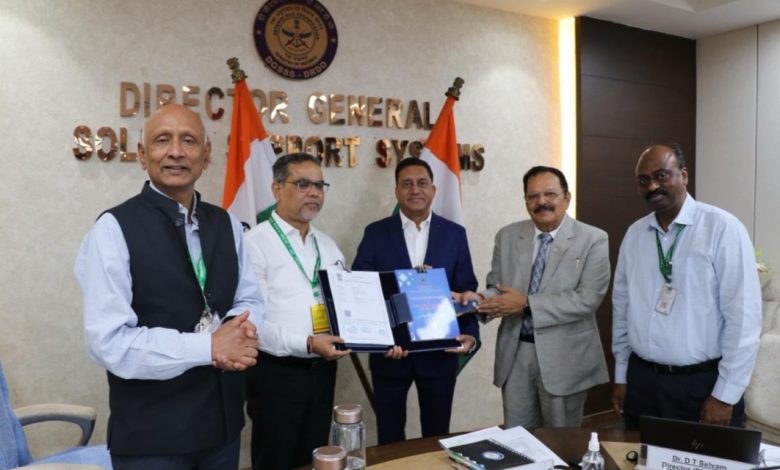
The Defence Research and Development Establishment , Gwalior, has formally transferred its indigenously developed High Performance Biodigester technology to industry in a strategic move aimed at advancing sustainable and decentralized human waste treatment solutions across the country. The Licensing Agreement for Transfer of Technology was handed over on 25 March 2026 by Dr Manmohan Parida, Outstanding Scientist and Director, DRDE, in the gracious presence of Dr UK Singh, Director General , DRDO, at an official ceremony in Delhi. The technology has been licensed to M/s Daiki Axis Environment Pvt. Ltd., Faridabad, which is a wholly owned subsidiary of the Japanese company M/s Daiki Axis Japan.
Following the agreement, a senior delegation from Daiki Axis Environment Pvt. Ltd. visited DRDE Gwalior on 6-7 April 2026 to gain first-hand understanding of the technical know-how behind HPBD. The delegation was led by Mr Rio Waza, Managing Director and Chief Executive Officer of Daiki Axis Environment Pvt. Ltd., and included other senior company representatives namely Shri KC Pandey and Shri Kamal Tiwari. During the visit, a detailed technical presentation on HPBD was made by Dr AK Goel, Scientist ‘G’ and Head of the BPT Division at DRDE Gwalior.
The engagement marked the beginning of structured industry handholding with the first kick-start meeting held between the industry representatives and the HPBD technical team of DRDE. The DRDE team comprised Dr Goel, Dr Vijay Pal, Dr MK Meghvansi, and Dr NK Tripathi. The collaboration took a further step forward on 7 April 2026 when Dr Manmohan Parida handed over a copy of the LATOT document to Mr Waza, formalizing the start of capacity-building and implementation efforts.
DRDO said the HPBD is the first indigenous technology in the country that integrates anaerobic, aerobic and tertiary treatment strategies for human waste. The transferred technology is expected to be scaled up into real-world solutions to address critical challenges in human waste management and sustainable sanitation. Officials noted that the system will contribute to the reduction of environmental pollution, improved public hygiene, water reuse and sustainable waste-to-resource management, thereby supporting the Swachh Bharat Mission, circular economy goals and broader sustainable development objectives.