Book on Bihar’s Political and Developmental Future Launched at Press Club of India Author Gyan Bhadra discusses leadership, governance and the state’s persistent socio-economic challenges at a panel discussion in New Delhi

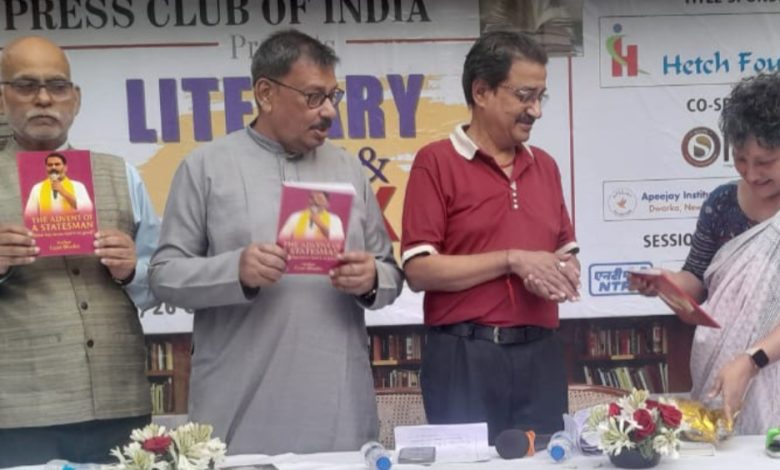


NEW DELHI, October 25: The Advent of a Statesman: Bihar Has Never Had It So Good, a book authored by Gyan Bhadra, journalist and columnist The Pioneer, was formally unveiled and launched at the three-day Literature Festival and Book Fair organised by the Press Club of India from October 24 to 26.
The book was launched on October 25 by Sangeeta Barooah Pisharoty, Festival Convenor and President of the Press Club of India, in the presence of eminent journalists, members of the Press Club and publishers. Among those present was Mr. Gautam Lahiri, veteran journalist, President of the Federation of Press Clubs and former President of the Press Club of India.
The launch was followed by an engaging panel discussion examining the book’s central arguments on Bihar’s development, political leadership and governance. Veteran independent journalist Abhay N. Jha, former Special Correspondent of the Assamese daily Asomiya Pratidin, was the chief panelist.
The discussion explored several persistent challenges confronting Bihar, including declining educational standards, inadequate healthcare facilities, agricultural distress, rural hardship, migration and the difficulties faced by women in rural areas. These issues formed a key part of the book’s examination of the state’s development trajectory and the role of political leadership in shaping its future.
A significant part of the discussion centred on the book’s provocative title, with panellists questioning whether The Advent of a Statesman was overly optimistic. They also raised a fundamental question: can a single leader transform an entire state?
Responding to the question about the title, Bhadra explained that it reflected the perspective and arguments developed in the book. He maintained that any serious assessment of Bihar must take account of both the progress achieved and the challenges that remain unresolved.
“Optimism is most meaningful when it encourages us to examine the evidence, identify shortcomings and consider what needs to be done next,” was the essence of his response.
Addressing the question of whether one individual could transform an entire state, Bhadra emphasised that sustainable development could never be the achievement of a single leader acting alone. While leadership could establish priorities, mobilise public support and shape institutions, lasting transformation required effective administration, sound economic policies, private investment, civil society engagement and active citizen participation.
He argued that the relationship between political leadership and institutional capacity deserved close scrutiny, particularly in a state such as Bihar where deep-rooted socio-economic challenges require sustained and coordinated efforts.
The discussion brought the book’s central concerns into focus, moving beyond the personality of a political leader to consider the broader questions of governance, institutional reform and inclusive development. It also underscored the importance of critically examining the promises of political change against the realities of education, healthcare, agriculture, employment and rural livelihoods.
The launch and subsequent discussion provided a platform for journalists and readers to engage with the book’s arguments and reflect on the opportunities and challenges that will shape Bihar’s future.