DELIMITATION IN THE NAME OF WOMEN’S RESERVATION: A THREAT TO UTTARAKHAND’S REGIONAL REPRESENTATION AND THE VERY SPIRIT OF STATEHOOD

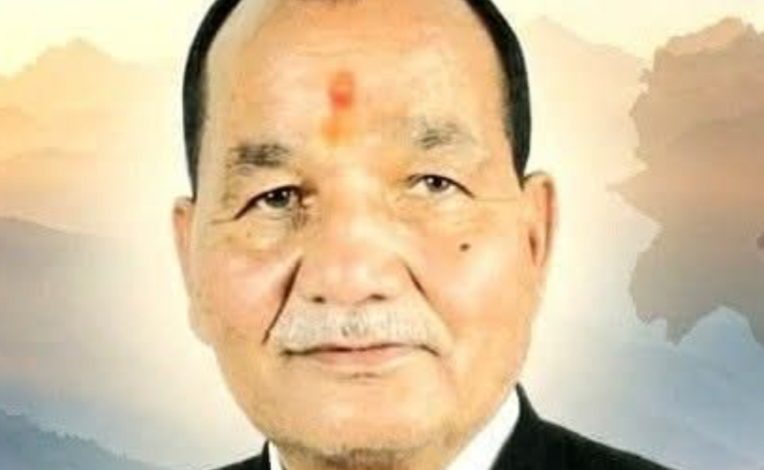
Former Uttarakhand Kranti Dal President Kashi Singh Airy calls for geography-based delimitation, asserting that population alone cannot determine political representation in a geographically diverse Himalayan state
Uttarakhand Kranti Dal (UKD) extends its full support to women’s reservation. However, it strongly opposes population-based delimitation being introduced in the name of women’s empowerment. In a state like Uttarakhand, delimitation must take geographical area, difficult terrain, regional disparities and the special circumstances of mountain regions into account, rather than being determined solely by population.
The proposed increase in Lok Sabha seats followed by population-based delimitation could adversely affect the national representation of southern states as well as Himalayan states. However, in Uttarakhand’s case, the issue goes beyond the number of Lok Sabha seats. It concerns the very objectives behind the creation of the state, its distinct geographical identity and the political representation of its mountain regions.
Uttarakhand was not created merely for administrative convenience. The demand for a separate state emerged from the unique geographical conditions of the hills, regional inequalities, uneven development, large-scale migration and the need to ensure meaningful political and administrative participation for the people of the mountain regions. The fundamental spirit of the Uttarakhand statehood movement was to secure a separate political voice for the hills and ensure that their specific problems and developmental needs received adequate attention.
If population alone becomes the basis of delimitation, the existing imbalance between the hills and the plains is likely to deepen further. The representation of mountain regions in both the State Assembly and Parliament could progressively weaken, irrespective of their geographical size, strategic importance and developmental challenges.
At present, Uttarakhand has five Lok Sabha seats and 70 Assembly constituencies. Geographically, the hill regions account for three Lok Sabha constituencies and approximately 34 Assembly seats, while the plains have two Lok Sabha constituencies and approximately 36 Assembly seats.
If population-based delimitation is undertaken and the number of Lok Sabha seats increases to an estimated seven or eight, the hill regions may continue to have only three seats, while the plains could account for approximately four to five seats.
Similarly, if the strength of the Uttarakhand Legislative Assembly increases to an estimated 105 seats, population-based delimitation could result in approximately 40–45 seats for the hill regions and 65–70 seats for the plains. This could further intensify regional imbalance in legislative decision-making.
Such a widening political imbalance could aggravate tensions between the hills and the plains. Airy cautions that the resulting regional alienation could create serious social and political tensions in Uttarakhand, warning against a situation of the kind witnessed in Manipur.
The central question, therefore, is whether Uttarakhand’s future will be determined exclusively by population figures or whether its geographical realities and regional inequalities will also receive equal consideration.
The geographical conditions, population density, difficult terrain, border villages, migration, availability of resources and developmental challenges of the hills and plains are fundamentally different. An Assembly constituency in the plains cannot be compared with a remote mountain constituency merely on the basis of population, given the enormous differences in geographical and administrative challenges.
If population is made the sole criterion for delimitation, the political and policy-making influence of the mountain regions will gradually diminish. The very regions whose development, protection and political empowerment inspired the demand for Uttarakhand could find themselves increasingly marginalised in the decision-making process.
This is not merely a question of increasing or decreasing the number of seats. It is about safeguarding Uttarakhand’s regional identity, democratic participation and the fundamental spirit behind its creation.
Uttarakhand Kranti Dal has consistently advocated delimitation based not merely on population but also on geographical considerations. The distinct circumstances of the hills and plains, geographical area, difficult accessibility, border locations and regional requirements must be taken into account to ensure equitable representation in legislative bodies.
According to Airy, democracy should not be understood solely in terms of allocating seats in proportion to population. It must also ensure that every geographical region of a state has an adequate and effective voice in the legislature.
Uttarakhand Kranti Dal reiterates its unequivocal support for women’s reservation. Women must receive their rightful share in political representation. Airy questions the need to increase the number of parliamentary seats and undertake delimitation merely to implement women’s reservation.
He argues that the Women’s Reservation Act, passed in 2023, should be implemented by reserving seats for women within the existing strength of 543 Lok Sabha seats, rather than linking women’s representation to an expansion of seats and population-based delimitation.
He makes it clear that UKD’s opposition is not to women’s reservation but to the policy of making population the sole basis for delimitation.
In a mountainous state like Uttarakhand, a fair delimitation exercise must consider geographical conditions, regional disparities, difficult terrain and the specific requirements of border areas. Only then can balanced representation of both the hills and the plains be ensured.
Airy has appealed to all political parties, social organisations and concerned citizens of Uttarakhand to unite on this issue. He maintains that delimitation in the name of women’s reservation cannot be allowed to further widen existing regional disparities or weaken the political representation of the mountain regions.
Calling upon the people of Uttarakhand and opposition parties to raise a united voice, the former UKD president has stressed that geographical realities and regional balance must form an integral part of the delimitation exercise. The voice of the hills and other Himalayan regions must remain effectively represented in both the State Assembly and Parliament.
The statehood movement was fought against geographical discrimination and regional neglect. The same inequalities must not be allowed to return through population-based delimitation.
Protecting Uttarakhand’s identity, the rights of its mountain communities and the original vision behind the creation of the state, Airy asserts, makes geography-based delimitation an essential demand.