Massive Student Protest Shakes Delhi, Jantar Mantar to Parliament Choked as Police Use Lathicharge and Tear Gas


By Sunil Negi
New Delhi: In what is being described as the biggest student mobilisation against the Modi government in 12 years, lakhs of students and unemployed youth on Sunday surrounded Jantar Mantar and later marched towards Parliament, bringing central Delhi to a standstill.
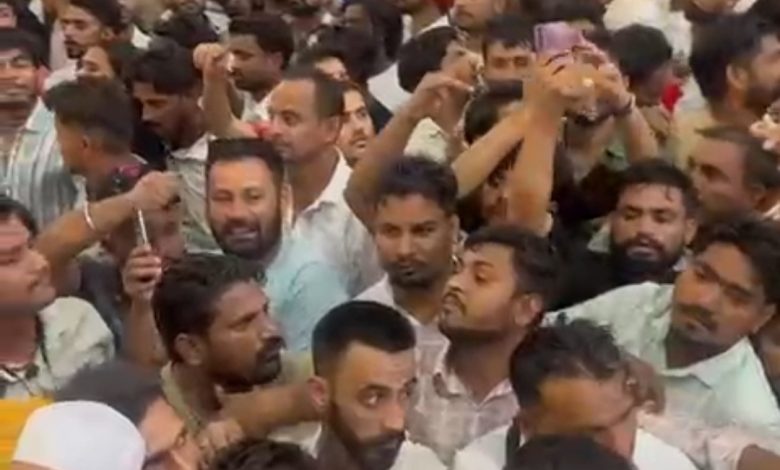
According to a senior Delhi Police officer, more than 2 to 3 lakh students from across the country and from universities in nearly every state had gathered at Jantar Mantar by mid-day. Chants demanding the resignation of Prime Minister Narendra Modi echoed through the area. The anger, which began over the NEET paper leak and calls for Union Education Minister Dharmendra Pradhan to step down, has now turned directly towards the Prime Minister. Protesters alleged that the government’s attempt to “save Pradhan’s chair” has cost the future of lakhs of aspirants.
The scale of the gathering overwhelmed Delhi Police’s elaborate barricading. Multiple layers of barricades, water cannons and riot-control vehicles deployed around Jantar Mantar and along Parliament Street proved ineffective as students broke through from all four sides. By afternoon, traffic on Sansad Marg, Ashoka Road and Connaught Place was completely blocked.
Tensions escalated around 3:30 pm when a section of protesters attempted to push past the final police cordon near Transport Bhawan towards Parliament. Police responded first with warnings over loudspeakers, and then with a lathicharge. Within minutes, tear gas shells were fired to disperse the crowd. Visuals from the site showed students running for cover, some falling on the road, while others tried to help the injured. Medical teams and volunteers set up makeshift first-aid camps on the footpaths. Protest organisers claimed that several students sustained injuries and were taken to RML and Safdarjung hospitals, though official confirmation on numbers is awaited.
The use of force drew immediate condemnation from protest leaders. They alleged that the government’s decision to forcibly remove climate activist *Sonam Wangchuk* from his hunger strike and shift him to Safdarjung Hospital had added fuel to the fire. “By detaining Sonam ji and using force on students, the Modi government has invited a bigger crisis,” said a coordinator at the protest site. “The youth will not go back until accountability is fixed.”
The protest saw unprecedented unity. Students from Delhi University, JNU, AMU, BHU, Punjab University, and institutions from Uttarakhand, Maharashtra, Bihar, Rajasthan and the Northeast were seen marching together under a common banner. Slogans against paper leaks, unemployment and “destruction of constitutional institutions” dominated the air. Many carried placards linking the NEET scandal to 20 reported student suicides over the last year.
Opposition leaders who reached Jantar Mantar said the protest was a referendum on the government’s education policy. They alleged that attempts to “break the Opposition in Parliament and change the Constitution to ensure permanent BJP-RSS rule” would receive a setback if the government did not listen to the streets now.
Delhi Police maintained that the action was taken to prevent a breach of the high-security Parliament zone. A police spokesperson said “necessary and proportionate force” was used after protesters ignored repeated requests to stay within designated areas. Internet restrictions were briefly reported around central Delhi, but were later lifted.
As night fell, thousands continued to sit at Jantar Mantar, refusing to leave. Organisers said the next course of action would depend on how the government responds in Parliament on Monday. The success of the movement, they added, will now hinge on whether it can be channelled into a broader push for systemic reform in education, jobs and democratic accountability.
For now, the images of a young crowd, tear gas in the air, and barricades lying broken have become the defining picture of a government facing its most intense street challenge in over a decade.