
Union Budget 2026–27: Uttarakhand’s Climate, Ecology & Disaster Management Concerns Remain Unaddressed

Dehradun:
The Union Budget 2026–27, presented on February 1, 2026, has once again failed to provide any clear, dedicated allocation or policy framework for Uttarakhand or the larger Indian Himalayan Region, despite the region facing repeated climate-induced disasters and growing ecological stress.
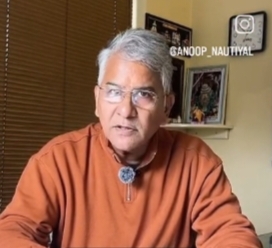
Commenting on the budget, Anoop Nautiyal, founder of Dehradun based SDC Foundation which works on environmental, policy and social issue of Uttarakhand said that over the past decade, Himalayan states particularly Uttarakhand have witnessed frequent cloudbursts, landslides, flash floods, forest fires, glacial instability, and infrastructure damage. These are no longer isolated natural events but part of a deepening climate crisis that disproportionately impacts fragile mountain ecosystems and communities. Yet, the Union Budget continues to approach the Himalayas through broad, generic, national schemes on infrastructure, tourism or rural employment, without recognising the region’s unique ecological, geographic, climatic and disaster-related costs.
Anoop Nautiyal emphasised that the state’s and the Indian Himalayan Region’s demands such as green bonus, ecological compensation for Himalayan states, mountain-specific disaster risk index or a dedicated Himalayan resilience and adaptation fund are noticeably absent in the budget. These proposals, raised repeatedly by state governments, experts, and civil society groups, find no explicit mention in the Budget speech or headline allocations.
This absence is particularly stark in the context of recent public statements by Uttarakhand Chief Minister Pushkar Singh Dhami, who had highlighted the challenges posed by the state’s floating population, including the Char Dham Yatra, major religious congregations, and large upcoming events such as the Kumbh Mela. While the Chief Minister had pointed out the enormous pressure such events place on the state’s infrastructure, the Union Budget does not reflect any corresponding financial support or special allocation to address these realities.
Commenting further on the budget, Anoop Nautiyal said that the Union Budget once again missed an opportunity to acknowledge the Himalayas as a distinct ecological and disaster-prone region. Uttarakhand and other Himalayan states bear national costs by protecting water sources, biodiversity, and climate stability but receive no dedicated financial recognition for this role. Without substantial green or conservation allocations, mountain-specific disaster frameworks, or climate adaptation funding, we are pushing these states to the brink.
He further added that continued reliance on generic schemes fails to capture the cumulative impact of climate change, unplanned tourism, and infrastructure expansion in fragile mountain systems.
He expressed further concern that as climate risks intensify, the cost of inaction will not be borne by Himalayan states alone, but by the entire country that depends on the Himalayas for water security, climate regulation, and ecological balance. The Union Budget 2026–27 serves as yet another reminder that recognising this reality can no longer be postponed.
Anoop Nautiyal concluded that the budget’s silence reinforces the urgent need for Himalayan states to come together on a common platform to articulate shared demands—whether on ecological compensation, disaster financing, or sustainable development pathways. While current political realities may make such coordination difficult, a collective Himalayan voice remains the most effective way to ensure that national policy reflects ground realities.