Detention and deportation of children is inhuman and illegal writes former IPS and founder Prayas

New Delhi
Amod K Kanth & Amitabh Srivastava
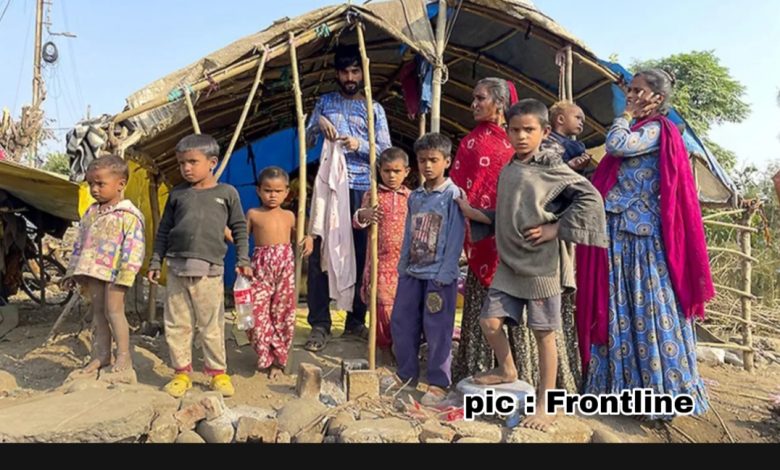
The disturbing visuals of hundreds of men, women and children labelled ‘illegal’ Bangladeshi migrants rushing to the borders in West Bengal to cross over to Bangladesh unsure of the kind of reception they would be getting in their ‘homes’which they might have left years back are shocking.
The reason for this panic rush is the latest order of the West Bengal Government to create ‘Holding Centres’ for illegal migrants till they are deported.
According to news reports the newly elected Chief Minister, who heads the Foreign Branch and the SAARC Vision Centre of his own government has issued orders to the BSF personnel to draw a clear boundary with Bangladesh and start deporting illegal migrants from Bangladesh from the State.This in itself is easier said than done.
Connected to the legal or illegal habitations on the borders are the chunks of lands or riverine islands connected to rivers like Brahmaputra in India and the Padma river in Bangladesh which keep changing their courses every few years and accordingly the border lines keep shifting. Amongst these inhabiting families, too, there may be large number of children whose lives and rights thrown into huge uncertainties, like in the disasters and crisis, may be adversely affected
Our concern however with the latest omnibus direction to officers in West Bengal to detect, delete and deport the illegal foreigners, in line with the March 2025 order of the Ministry of Foreign Affairs is about the status of these families, including the ‘children in need of care and protection(CNCP)’ (less than 18 years within the meaning of UNCRC and Juvenile Justice (Care and Protection of Children) Act 2015), whose basic needs and justiciable rights may get violated .
In March 2025 Parliament had passed the Immigration and Foreigners Act 2025 providing a Verification deadline to investigate suspected immigrants from Bangladesh and Myanmar within a 30-day window.
This has already come into action from September 1, 2025 in Assam and now the West Bengal government has declared its intention to follow suit.
When we look at these developments it appears that not much thought seems to have gone into the ramifications of these actions on children with whom we have been dealing since the last 38 years at Prayas Juvenile Aid Centre now working in 12 States/UTs and several Civil society organisations working for such children.
The question is what will happen to these children without a nationality who also become stateless?
Article 7 of the United Nations Child Rights Convention (UNCRC) of 1989, ratified by India in 1992 and seriously enforced through appropriate domestic legislation clearly provides that ‘every child has right to be registered at birth, to have name and nationality, as far as possible, to know and be cared for by the parents’. The UNCRC being the most globally accepted UN Instrument containing the list of child rights in the world (having been endorsed by 196 countries) clearly states, among others, that every child has the Right to belong to a nationality.
It deserves a special mention that India ratified the UNCRC in 1992 and it became justiciable in this country through the Commission for Protection of Child Rights (CPCR) Act 2005 and I had the privilege of being the First Chairman of the Delhi Commission for Protection of Child Rights (DCPCR) and enforce these rights.
Ever since I read this news of ‘detention centres’ resurfacing in West Bengal and Assam, what disturbed me is the fate of the children who would either be put in detention camps or separated from their parents, both of which are illegal.
Separation from parents under the Indian laws is permitted only in protective custody cases or when it is dangerous to keep them with parents or guardians, keeping the ‘best interest’ of the child in mind. For all such children, including the CNCP and the CCL (children in conflict with law),besides the parents and guardians all functionaries, governmental and non-governmental, are expected to follow the child protection laws and guidelines.Needless to mention, there have to be proper legal processes for children alongside their families being deported in whatever manner found legally appropriate by the Union and State governments.
As of today, we have no clear information about how many children will be affected by this trauma of separation for no fault of theirs, and whether they are being produced before the local Child welfare Committees ( CWC within the JJ Act 2015) for appropriate orders . So far, the Centre has not clearly spelt out its stand on how it is going to deal with this issue of children. To a specific question asked by the NGO Citizen for Justice and Peace in 2020 about keeping children in detention centres, as reported, the Attorney General KK Venugopal had declared that children will not be sent to detention centres.
“I cannot conceive of children being sent to detention centres, as of now…” he had stated.
We are not aware what is the latest stand of the Government on this issue six years later in 2026.
Incidentally, even sending children to shelters or Homes-called Child Care Institutions- after being rescued from multiple forms of deprivations, child labour or abuse is a process of law provided under the Juvenile Justice Act. And there appears to be no provision in the Act at all to send children to detention centres, as of today.
But there is more to it. Section 3 (1) of the CAA of 2019 has created more confusion about the status of children in India leaving hundreds of children ‘stateless’ which, as I pointed out in the beginning, was violative of the UNCRC to which we are signatory.
It states that children born between January 26,1950 and July 1,1987 in India were natural citizens of the country. The children born between January 2, 1987 and December 3,2004 would be Indian citizens if one of the parents is an Indian. After that it comes to the next category of children born after 3rd December 2004 wherein children would be granted citizenship if they are born to both Indian parents or where one is an Indian and the other is not an illegal migrant. It requires a thorough inquiry and legal scrutiny to ascertain the actual position of each child thus being dislocated and affected.
It has been 22 years since 2004 and children born since then would be adults, many of them married and in jobs. Now if suddenly they are being told that they do not belong to this country where do they go?
Do we have a treaty with Bangladesh or Myanmar that they would welcome and offer all their natural born rights once we have deported them.
There is no clarity on this issue about the adults much less about the hapless children. Where are these stateless children supposed to go now?
It’s a question that should bother the souls of all law-abiding citizens, not just NGOs.
(Amod K Kanth & Amitabh Srivastava are the writers of this article and the views expressed are their personal with UKnationnews not responsible )