Strait of Hormuz cleared for India after EAM Jaishankar spoke to his counterpart in Iran,
One sailor killed in an attack on Oil tanker MT Safesea Vishnu,near Basra Iraq

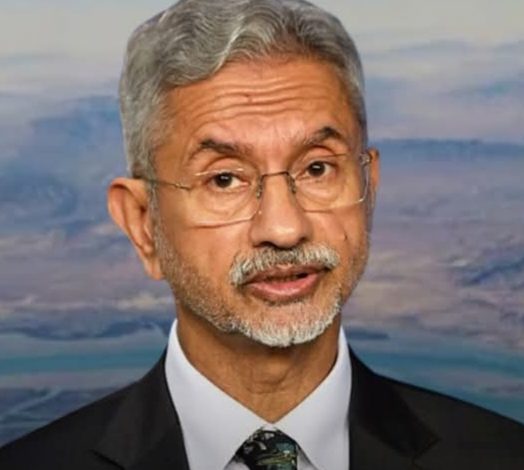
After the blockage of the Strait of Hormuz not allowing any country the passage of oil tankers, ships including India, the Indian government finally got a great reprieve after the foreign minister of Iran on the request of the Indian foreign minister S. Jaishankar agreed to give it a safe passage through Hormuz.
In India the news about the shortage of domestic gas was being propagated in the news with prime minister Narendra Modi assuring that India has enough reserve and there is no need to worry. However, after the adamant attitude and decision of Iran, completely blocking the strait of Hormuz not allowing any country especially United States , the latter had threatened Iran with serious consequences.
However, following the diplomatic interaction between Indian Foreign ministers S. Jaishankar and his Counterpart in Iran Abbas Aragachi finally allowed India to safe passage to India flagged tankers specifically mentioning vessels like PUSHPAK AND PARIMAL.
The multiple diplomatic efforts finally bore fruits and the passage in the strait of Hormuz granted.
Meanwhile, the government of India has confirmed about the demise of one Indian Seafarer after a white coloured unmanned speedboat carying explosives approached the vessel from the starboard side and rammed into it, resulting in a major fire onboard. This is believed to be an Iranian vassel said the news reports. This happened near Basra Iraq.
According to a press release issued by ministry of external affairs issued on March 12 the Government of India has received information regarding an incident involving the oil tanker MT SAFESEA VISHNU near Basra, Iraq, on 11 March 2026, during ship-to-ship (STS) cargo loading operations off Khor Al Zubair Port. According to the MRA release
at approximately 2100 hrs UTC on ll March 2026, the tanker MT SAFESEA VISHNU (Flag:Marshall Islands;IMO No. 9327009), which was carrying around 48, 000 metric tonnes of naphtha, was struck by an unidentified object.
Preliminary reports indicate that a white-coloured unmanned speedboat carying explosives approached the vessel from the starboard side and rammed into it, resulting in a major fire onboard.
Following the incident, all crew members abandoned the vessel and entered the water to ensure their safety.
They were subsequently rescued by an STS tug operating in the vicinity.
The Iraqi Coast Guard evacuated all 28 crew members, including 16 Indian nationals and 12 Filipino nationals, and transported them safely towards the Port of Basra.
Firefighting tugs remain deployed at the site and are working to contain the blaze.
It is with deep regret that the Directorate General of Shipping, Ministry of Port, Shipping and Waterways confirms the demise of one Indian seafarer.
Among the rescued personnel, 15 are Indian nationals, including the vessel’s Master.
All rescued seafarers are reported to be safe and are currently located on a small island near Basra.
The Embassy of India in Baghdad is in close coordination with Iraqi authorities to ensure the welfare of the Indian nationals involved and to facilitate necessary assistance.
The Directorate General of Shipping, Mumbai expresses its deepest condolences to the family of the deceased seafarer.
The incident highlights the evolving security challenges faced by commercial shipping in the region, and the Government continues to closely monitor developments in coordination with relevant authorities.
Further updates will be shared as more information becomes available.
According to the writer of Ascent Begins, Shanaka Anslem Petera the Jaishankar-Araghchi phone call is the most consequential diplomatic exchange of the war that nobody is covering. It establishes that the post-28 February Hormuz is not closed and not open. It is licensed. And the licensing authority is a government whose Supreme Leader is cardboard, whose military command just announced continuous strikes, whose 31 autonomous provincial commands operate on sealed orders from a dead man, and whose foreign minister grants transit waivers that no one can guarantee the military will honour.
The waiver is issued by Tehran’s diplomatic wing. The weapons are controlled by the Mosaic Doctrine’s 31 autonomous commands. The diplomatic wing and the military wing do not communicate through a functioning chain of command. The same disconnect that burned Oman’s oil tanks while the president apologised could strike an Indian tanker while the foreign minister guarantees its safety.
India has 10 million citizens working in the Gulf. Their remittances sustain families across Kerala, Tamil Nadu, Andhra Pradesh, and Uttar Pradesh. India imports two-thirds of its LNG through the Strait. India’s March fertiliser tenders went unawarded because no cargo could transit. The permission is not optional. It is existential. And the country granting it cannot guarantee its own military will respect it.
The Strait of Hormuz now operates on the same principle as every choke point this war has created: the threat is cheaper than the defence, the insurance cannot price it, and the authority that grants passage answers to a dead man’s orders and a living man’s cardboard photograph.
Kindly recall that Iran now issues transit permits for the Strait of Hormuz the way a border authority issues visas at an airport. China transits via the shadow fleet under IRGC protection without asking, 11.7 million barrels since 28 February, because China funds the war machine. Bangladesh negotiated a waiver on 10 th March. India negotiated one on 11th March. Thailand did not negotiate. The Mayuree Naree was struck by a projectile. Three sailors are missing.