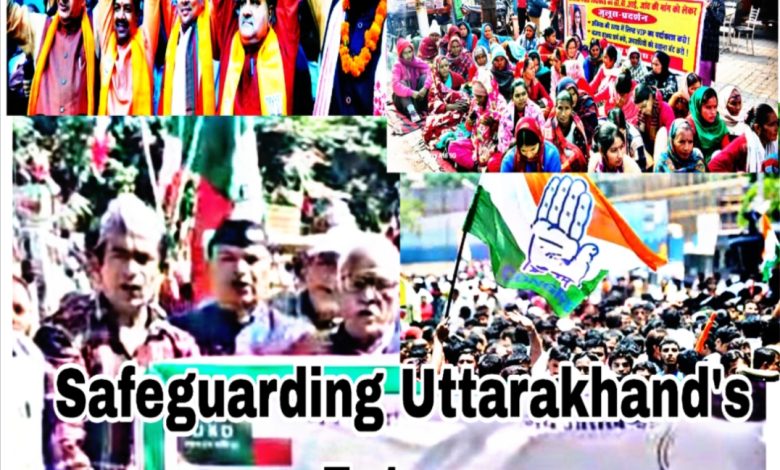
Why Dialogue Is Now a Democratic Responsibility Uttarakhand’s future cannot be entrusted to narrow political calculations, short-term economic arithmetic, or ideologically driven centralisation of power, says seasoned journalist SURESH NAUTIYAL- Greenananda
Uttarakhand, the Himalayan state, is not merely an administrative unit carved out of a larger province; it is an ecological civilisation, a cultural landscape, and a democratic promise born of prolonged struggle and collective imagination. What confronts Uttarakhand today is, therefore, not simply a crisis of governance or policy direction, but a deeper erosion of its moral, ecological, and democratic soul.
Behind reassuring growth figures, infrastructure announcements, and claims of national integration lie the everyday anxieties that now define life in the hills. Villages stand emptied of youth. Parents struggle to find brides for their sons because dignity has come to be measured in government jobs and urban property rather than rooted livelihoods. Young women are compelled to equate security and self-worth with migration. Fields once cultivated with care and continuity now lie abandoned, while wild animals roam village pathways, turning agriculture into an act of courage rather than sustenance.
These are not private misfortunes or cultural failures. They are political outcomes—produced by a development model that has steadily withdrawn the state from rural life while concentrating opportunity, infrastructure, and power elsewhere. What is unfolding is not accidental decline, but a systemic displacement of mountain society from the imagination of governance itself.
A State Born of Ecological Wisdom and Democratic Aspiration
Uttarakhand was born out of a historic people’s movement that placed ecology, cultural dignity, and democratic participation at its core. The demand for statehood was not merely about administrative convenience; it was about asserting that mountains require a different political imagination—one attuned to fragile ecosystems, dispersed settlements, community knowledge, and limits imposed by nature itself.
Statehood promised decentralisation, ecological sensitivity, cultural respect, and participatory governance. It promised a break from plains-centric models of development that treat land as commodity, rivers as infrastructure, and people as expendable labour.
More than twenty-five years after its formation, that founding promise appears not only fragile, but betrayed.
Environmental degradation across the Himalayan landscape has accelerated. Reckless road-building, tunnels, dams, mining, unregulated tourism, and large projects imposed without ecological consent have destabilised slopes, rivers, and human settlements alike. Climate change has intensified floods, landslides, glacial retreat, and extreme weather events, while governance responses remain reactive, technocratic, and divorced from lived experience.
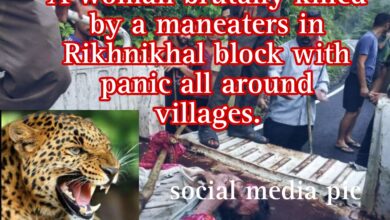
Yet the most profound violence is quieter. Forests reclaim abandoned farms not as symbols of ecological recovery, but as evidence of human retreat. Wild boars, monkeys, langoors, and leopards convert subsistence agriculture into daily risk. Man-eating animals become tragic symbols of a state that has abdicated its responsibility to protect both people and ecological balance.
Governance Without Presence, Development Without Care
Governance in Uttarakhand has increasingly become governance without presence. Decision-making is centralised, opaque, and insulated from local realities. Policies framed for uniformity repeatedly fail in hill districts, producing frustration, alienation, and distrust.
Economic growth remains uneven and exclusionary. Hill regions face unemployment, agricultural collapse, and distress migration, while urban pockets absorb disproportionate political attention and resources. The retreat of the state from rural healthcare, education, wildlife management, and livelihood protection has transformed governance into absence.
Where the state should have acted as a protector and mediator between society and nature, it has too often become an extractive authority—facilitating projects that benefit distant interests while externalising ecological and social costs onto mountain communities.
Social institutions have weakened. Traditional livelihoods and cultural practices erode not because they are obsolete, but because policy frameworks no longer recognise their value. Public education and health systems—once imagined as instruments of social justice—are hollowed out by neglect, staff shortages, privatisation, and declining quality, especially in remote areas.
Migration hollows villages, distorts marriage patterns, fractures intergenerational continuity, and transforms living communities into demographic shadows. A society that cannot reproduce itself socially is a society pushed to the margins of history.
Democracy Under Strain
Politically, the space for plural debate has shrunk. Regional political formations—like the Uttarakhand Kranti Dal (UKD)—that once articulated Uttarakhand’s aspirations have weakened, narrowing democratic imagination and alternatives. The overwhelming dominance of a single political narrative has raised serious concerns about democratic vitality.
The expanding influence of the BJP–RSS nexus—with its ideological emphasis on homogenisation, central control, and majoritarian nationalism—has generated deep unease among citizens committed to constitutional values. Shrinking civic space, delegitimisation of dissent, and politicisation of institutions undermine the plural, federal, and participatory ethos that animated Uttarakhand’s movement for statehood.
Democracy does not survive on elections alone. It survives on listening, decentralisation, dissent, and dignity. When village councils (Gram Sabhas) are reduced to ritual, when communities are excluded from decisions about land, forests, water, and infrastructure, citizens are transformed from participants into spectators in matters that determine their survival.
Reclaiming the Moral Compass of Politics
The crises confronting Uttarakhand are deeply interconnected. Ecological destruction fuels migration; migration hollows democracy; democratic erosion enables authoritarian governance; and governance without accountability accelerates social and ecological breakdown. These cannot be addressed in isolation or through technocratic fixes.
What is required is a moral recalibration of politics itself.
Development must be reimagined not as speed and spectacle, but as care, balance, and dignity. Democracy must be reclaimed not as rule by numbers, but as respect for every voice. Governance must rediscover itself not as command from above, but as responsibility to those below.
In the Himalaya—where nature teaches limits, patience, and humility—reflection is not delay; it is wisdom.
Why Dialogue Is Now a Responsibility
In this moment of overlapping ecological, social, economic, and democratic crises, collective dialogue becomes not a choice, but a responsibility. Such a dialogue must bring together senior environmental and social activists, political scientists, sociologists, economists, public intellectuals, scholars, journalists, writers, cultural practitioners, political leaders, and public-minded individuals committed to democratic values, and grassroots movements.
The task is not merely to diagnose what has gone wrong, but to collectively imagine pathways toward restoration—of ecological sanity, participatory democracy, ethical governance, and social justice.
Hard questions must be confronted honestly.
· Can development in the Himalaya continue to defy ecological limits?
· Can governance regain proximity, accountability, and ethical purpose?
· Can decentralisation be revived as lived democratic practice rather than constitutional rhetoric?
· Can health and education be reclaimed as democratic rights rather than market services?
· Can regional political consciousness be rebuilt without nostalgia, yet without surrender?
· Above all, can Uttarakhand reclaim its original vision—a vision rooted in harmony with nature, respect for diversity, social justice, and active citizenship?
Safeguarding Uttarakhand’s future is therefore not only about saving a state. It is about defending a way of thinking, living, and governing that the mountains once offered as a moral lesson to the plains—and perhaps, to the world.
It is against this backdrop that all the above-mentioned concerned citizens should feel an urgent responsibility to initiate a collective dialogue on Uttarakhand’s future. This is not an academic indulgence, nor a partisan mobilisation. It is a democratic necessity born of historical responsibility.
( SURESH NAUTIYAL is an independent seasoned journalist and views expressed herein are his personal )