National Symposium on Women Agri-preneurs of Uttarakhand Successfully Organized

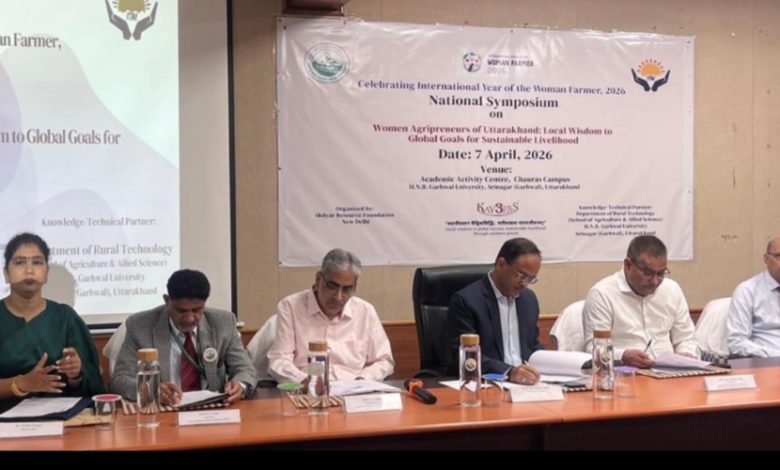

Molyar Resource Foundation, New Delhi, successfully organized a National Symposium on “Women Agri-preneurs of Uttarakhand: Local Wisdom to Global Goals for Sustainable Livelihood” in collaboration with the Department of Rural Technology, HNB Garhwal University.

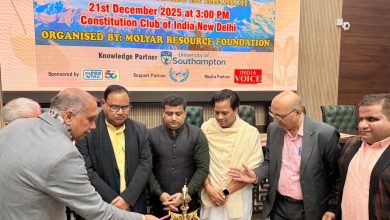
The programme began with registration, followed by an inaugural session including the traditional lighting of the lamp and Kul Geet.
The event witnessed the participation of distinguished academicians, social leaders, and around 20 successful women agripreneurs from remote districts of Chamoli, Pauri, Tehri, and Rudraprayag.
Key Highlights of the Inaugural Session
The inaugural session set a strong and inspiring tone for the symposium, bringing forward diverse perspectives on women-led rural development, innovation, and sustainability.
🔹 Prof. Rajendra Singh Negi, Convener of the Symposium, delivered the welcome address and presented a comprehensive overview. He emphasized that research must move beyond academic discussions and translate into real benefits for the last person in society. He highlighted the critical role of rural technology in empowering women and transforming grassroots economies.
🔹 Shri Durga Singh Bhandari warmly welcomed the dignitaries and elaborated on the relevance of the theme. Aligning the discussion with global priorities, he referred to the vision of the United Nations in recognizing the importance of women farmers. He discussed the key qualities of successful agripreneurs and highlighted both the challenges and opportunities faced by women in Uttarakhand. He underlined that a sustainable future of the region largely depends on empowering women agripreneurs.
🔹 Ms. Mamta Pangtey, Guest of Honour, stressed the importance of continuous handholding, mentorship, and institutional support for rural women entrepreneurs. She emphasized that guidance and encouragement at every stage are essential for their long-term success.
🔹 Prof. Ajeet Kumar Negi focused on strengthening agriculture-based livelihoods and highlighted the urgent need to document traditional food recipes and indigenous knowledge systems. He pointed out that such practices are not only healthy but also hold great potential for sustainable and niche market development.
🔹 Prof. B. S. Negi, President of DUTA, emphasized the importance of producing high-quality millets and other farm products in Uttarakhand. He suggested exploring diverse market channels to promote these products at national and global levels, thereby enhancing farmers’ income.
🔹 Prof. A. K. Bhagi from the University of Delhi shared valuable insights on the role of education and scientific research in driving rural innovation. He highlighted the importance of agroforestry and preserving traditional agricultural knowledge as key pillars of sustainable development.
🔹 Chief Guest, the Vice Chancellor Prof. Shri Prakash Singh appreciated the efforts of the organizers in bringing together stakeholders from different sectors. He assured full institutional support for promoting research, startups, and women empowerment initiatives. He also shared his forward-looking vision for strengthening academic research, innovation, and technology-driven solutions aimed at benefiting rural communities.
An important milestone of the event was the signing of an MoU between HNB Garhwal University and Molyar Resource Foundation for collaboration on identifying technologies that drive sustainable betterment for rural people, empower them through capacity building , cross learning knowledge dissemination for socio economic process. Also to promote research, innovation, and entrepreneurship among rural communities.
Around 20 women agripreneurs from the districts of Chamoli, Rudraprayag, Pauri, and Tehri actively participated in the symposium and shared their inspiring success stories as well as practical challenges during an interactive session.
Panel Discussion Insights
A panel discussion on “Women Agripreneurs Led Rural Transformation in the Himalayas” was conducted with the participation of faculty members from the Departments of Economics, Social Sciences, and Horticulture of the University, along with leading women agripreneurs, master trainers in skill development, and other thought leaders.
The discussion focused on the following key areas:Strengthening the role of women in rural economic transformation, Promotion of local products and value addition, Need for training, financial support, and access to modern technology, importance of self-help groups and institutional collaboration, Creating local employment opportunities to reduce migration and Encouraging sustainable and eco-friendly agricultural practices.
During the valedictory session, women agripreneurs from rural villages were felicitated with shawls and certificates in recognition of their achievements and contributions.