
Kazakhstan’s Constitutional Reforms: A Positive Step Toward Modern and Balanced Governance

Analysis
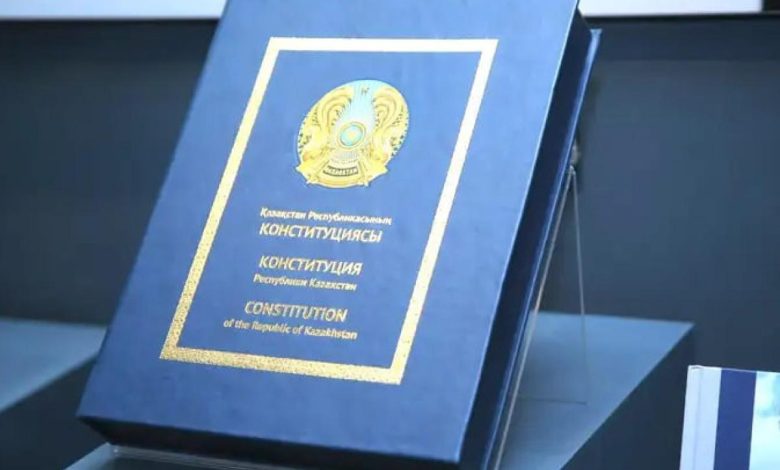
Kazakhstan’s decision to present a draft new Constitution reflects a confident and forward-looking approach to institutional development. From an Indian journalist’s perspective, the reform stands out not only for its scope, but for its clear focus on improving governance efficiency, legal certainty, and long-term stability.
One of the most notable innovations is the introduction of the institution of Vice President. This step signals a more structured and resilient executive framework, allowing for clearer distribution of responsibilities and continuity in state governance. The Vice President’s role in engaging with domestic and international socio-political, cultural, scientific, and educational organisations may also strengthen Kazakhstan’s external outreach and soft power.
The proposed transition to a unicameral Parliament is another positive development. By streamlining the legislative structure and expanding parliamentary powers, the reform aims to enhance efficiency and accountability. The proportional electoral system further supports political party development and more representative decision-making – an approach familiar and well understood in many democratic systems, including India’s.
Equally encouraging is the strong emphasis on the rule of law. The draft Constitution introduces enhanced procedural safeguards, strengthens protections for the legal profession, and reinforces principles such as the presumption of innocence and legal certainty. For international partners, these measures send a clear signal of Kazakhstan’s commitment to predictable and transparent governance.
The Constitution also places people at the centre of national development. By elevating education, science, innovation, and culture to constitutional priorities and introducing protections for citizens’ rights in the digital environment, Kazakhstan aligns its long-term strategy with global trends focused on human capital and technological progress.
Importantly, these reforms are presented as an evolution rather than a rupture. Core values such as sovereignty, secularism, social harmony, and territorial integrity are reaffirmed, ensuring continuity and stability alongside modernization.
For India, a close partner of Kazakhstan across multiple sectors, these constitutional changes are a welcome sign. A more institutionally balanced, legally robust, and future-oriented Kazakhstan enhances regional stability and opens additional opportunities for deeper bilateral cooperation.
Overall, Kazakhstan’s constitutional reform reflects a deliberate and positive effort to adapt state institutions to contemporary challenges while preserving political stability – an approach that merits close and constructive international attention.