Delhi Police Commissioner Anurag Kumar Tenders Unconditional Apology To Supreme Court In Contempt Case, Defends Curbs

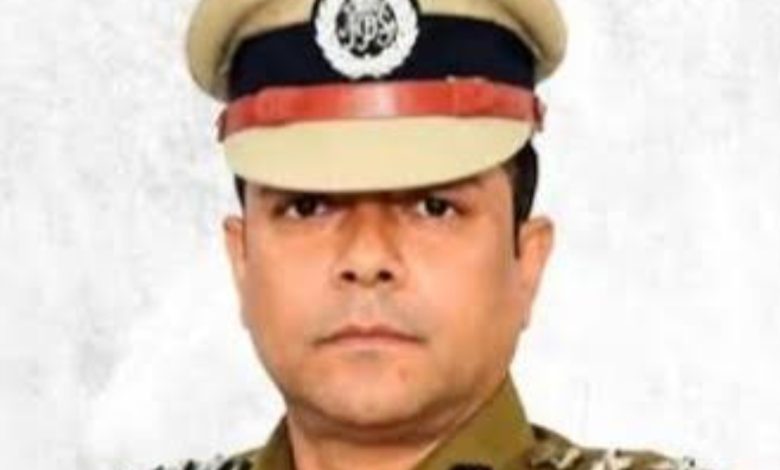
New Delhi: Delhi Police Commissioner Anurag Kumar today sought an unconditional and unqualified apology from the Supreme Court for alleged dishonouring of the apex court’s directives amounting to contempt of court.
Filing an affidavit before a two-judge bench comprising Chief Justice of India Surya Kant and Justice Joymalya Bagchi, the Commissioner said the contempt was not wilful or deliberate, but unintentional, and appealed to the Court to withdraw the contempt notice.
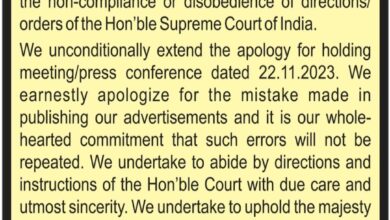
“At the outset I hereby tender my unconditional and unqualified apology to this Hon’ble Court. I state and submit that there has been no wilful or deliberate non-compliance with any of the directions,” Kumar stated in his affidavit.
Along with him, Union Home Secretary Govind Mohan also tendered a similar unconditional apology in a separate affidavit filed late Wednesday night.
The contempt petition was filed by Advocate Shailendra Mani Tripathi alleging violation of the SC’s order dated October 9. The court had directed that there should be no complete prohibition on Metro and train services, no illegal detentions, and that internet services should remain undisturbed ahead of the *Cockroach Janta Party (CJP)* protest call on October 10 demanding resignation of Chief Election Commissioner Gyanesh Kumar.
On October 11, Justices Bagchi and V Mohana recorded a prima facie case and issued notice to the Home Secretary, Delhi Police Commissioner and DMRC.
In response to CJI Surya Kant’s queries about not granting permission to the CJP to hold protest, closure of metro stations and suspension of internet services, the Commissioner cited law and order issues and intelligence inputs.
About internet services, he said cellular internet was suspended only within a 4-kilometre radius of Raisina Hill from 10 PM on October 9 to 10 PM on October 10, for one day only, on Delhi Police’s request to the Centre. He clarified it was proportionate, confined to cellular data only and did not extend to Wi-Fi and broadband. The Home Secretary defended it as a recognised measure to maintain public order.
Regarding closure of metro stations, the Commissioner said initially regulation was proposed at 57 stations but finally implemented at only *45 out of 303 stations* of Delhi Metro, about 15% of network. Full services were restored from 10 PM on October 10. The DMRC in its reply said all 4,157 scheduled trips ran on October 10, with entry/exit restricted at 45 stations on Delhi Police directions.
On allegations of illegal detention, police said individuals were removed under Section 65 of Delhi Police Act and Section 172 of BNSS and kept at makeshift centres for 2-6 hours, not in police lock-ups. Political leaders were accommodated in SHO chambers and offered tea and hot meals. No professional was prevented from discharging duties.
Kumar argued that timely, proportionate and lawful measures helped avert a major public order situation in the national capital, which carries its own sensitivities. “No police administration can permit any breach of public order when a call is given by an organisation with a recent history of mob violence, destruction of public property, and injuries to 240 police personnel,” the affidavit said.
Solicitor General Tushar Mehta, appearing for the authorities, told the bench that the apology tendered is contextual as law requires an alleged contemnor to apologise when contempt notice is issued, and assailed media reports highlighting “without context” that the government has apologised.
The matter will be further heard on Thursday.