By Suresh Nautiyal Greenananda
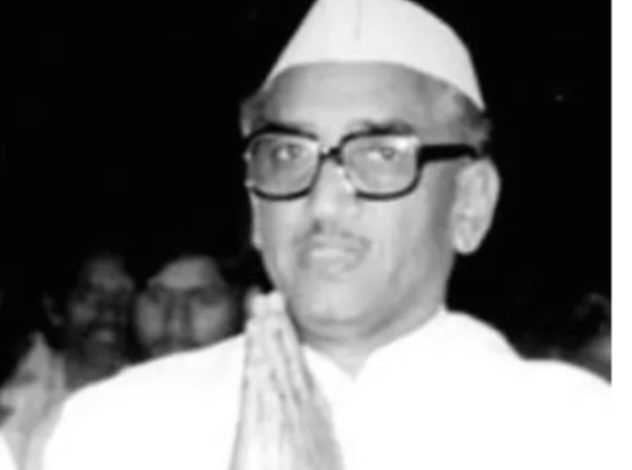
On the 37th death anniversary of Hemvati Nandan Bahuguna, who passed away on 17 March 1989 in Cleveland, Ohio, USA due to complications following a coronary bypass surgery, one recalls him not merely as a politician, but as an entire ethos of public life—shaped by struggle, dialogue, and a profound engagement with the people.
Born on 25 April 1919 in Bugani village of Garhwal district (now in Uttarakhand), Bahuguna emerged from the Himalayan soil not as a conventional politician, but as a practitioner of people-centric, ethical politics.
His formative years coincided with Mahatma Gandhi’s transformation of Indian political culture. Educated at Allahabad University, he combined intellectual rigor with activism, forming associations with leaders such as Lal Bahadur Shastri that reinforced humility, discipline, and service as guiding principles.
Active in student movements from 1936 to 1942 and prominently in the Quit India Movement, Bahuguna earned both influence and notoriety, with the British placing a bounty on him. These early struggles exemplified his core philosophy: politics is not merely power, but the awakening of political consciousness. In his presence, politics became a moral exercise, a careful balance of action and consequence.
After Independence, he rose swiftly through the Congress party ranks, serving in several organisational and ministerial roles. He held multiple portfolios in government, including Union Minister of Communications and later Union Finance Minister in 1979, a testament to his administrative skill and strategic vision at the national level. Earlier, he also served as Chief Minister of Uttar Pradesh from 1973 to 1975, where he demonstrated both governance acumen and political courage.
His alignment with Indira Gandhi during the Congress split of 1969 placed him at the centre of power, yet his loyalty was never blind. He later asserted the primacy of principle over personal allegiance, challenging policies and authority when ethical governance was at stake. Similarly, he served in Chaudhary Charan Singh’s Cabinet after the 1977 Janata Party victory, navigating complex alliances with a rare willingness to defy both regional and national heavyweights when conscience demanded. His temporary rebellion during the Emergency and repeated resignations reflected a deeper ethical struggle—a persistent question of whether one could remain truthful within systems demanding compromise.
Bahuguna’s secular vision was central to his public life. In an era when communal divisions threatened the social fabric, he embodied inclusivity and harmony, earning recognition as one of India’s most secular leaders. He is credited with pioneering political Iftars, gatherings that bridged communities and exemplified his belief that democracy was inseparable from social cohesion. His secularism was not ceremonial, but practical: a lived commitment to ensuring that the state served all citizens equally, irrespective of faith.
As Chief Minister of Uttar Pradesh, he revitalised a faltering Congress in the state, restoring public confidence and administrative discipline. Yet power never fully contained him. Positions at the Centre, including his tenure as Finance Minister, felt insufficient in purpose, prompting him to resign, return, and navigate shifting political landscapes alongside leaders such as Jagjivan Ram and Chaudhary Charan Singh. His bond with the grassroots was most evident in the 1982 Garhwal by-election, where he triumphed against the full machinery of the state, proving that trust earned locally can surpass institutional might.
Later, he even became first-ever Secretary-General of the All India Congress Committee, a position that placed him at the organisational core of the party and reflected the trust he commanded across factions.
For Bahuguna, politics resembled nature itself: diverse and sustaining like a forest, flowing and nourishing like a river, and steady and protective like the Himalaya. His “political school” existed not in textbooks or offices, but in mentorship, lived experience, and the shared act of listening and acting with the people.
In an era of centralised power and mediated narratives, his example remains both distant and urgently relevant, reminding us that politics is not merely an electoral contest but the cultivation of human capacity, moral courage, and democratic consciousness.
Even today, Hemvati Nandan Bahuguna inspires—not for the offices he held, but for elevating the very meaning of politics: ethical yet practical, rooted yet evolving, and above all, profoundly human.