Uttarakhand on Edge: UDAAI Monsoon Report by SDC Foundation and SCLHR, UPES School of Law Highlights a Season of Escalating Climate Risks

Dehradun
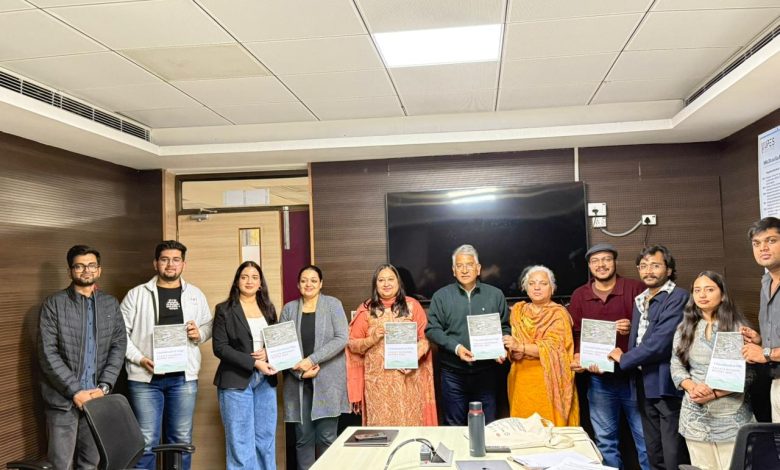
Dehradun based environmental action and advocacy group. Social Development for Communities (SDC) Foundation, in collaboration with the Society for Constitutional Law and Human Rights (SCLHR) and the UPES School of Law, released the report “Uttarakhand on Edge: UDAAI’s Monsoon Report 2025” at an event held at UPES, Dehradun.
Prepared as a part of the monthly Uttarakhand Disaster and Accident Analysis Initiative (UDAAI) framework, the report documents 13 major disaster events that occurred during the monsoon months of July, August, and September 2025, resulting in 69 deaths, 105 missing persons, and 115 injuries. Combining scientific insights, policy observations, and ground realities, the report captures one of the state’s most turbulent monsoon seasons in recent years.
The 2025 monsoon brought a series of climate-driven shocks, beginning with scientific assessments that identified 426 glacial lakes in Uttarakhand, including 25 considered dangerous, along with rapid glacier retreat and rising extreme rainfall events. These warnings materialised in July with intense cloudbursts, fatal landslides, and widening cracks along key travel and pilgrimage routes.
The situation worsened in August with the catastrophic Dharali flash flood in Uttarkashi, which swept away an entire village and reignited concerns over deforestation, unregulated construction, and unscientific slope-cutting in the Bhagirathi Eco-Sensitive Zone. By September, the Doon Valley faced severe flooding, highlighting fragile drainage systems, unchecked urbanisation, and the growing climate vulnerabilities of Himalayan towns.
The launch event saw participation from SDC Foundation, UPES School of Law, SCLHR, faculty members, law students, and the report’s editorial and research teams. Gautam Kumar opened the proceedings by outlining the purpose and structure of the report, emphasising the importance of systematic documentation to understand climate-linked disasters in a state facing accelerating ecological and infrastructural stress. He underlined UDAAI’s role in analysing scientific trends, tracking incidents, and identifying governance gaps.
Prerna Raturi then discussed SDC Foundation’s annual practice of documenting climate and disaster developments, noting that long-term documentation is essential for evidence-based policy making. She highlighted how UDAAI strengthens public understanding of disaster patterns and vulnerabilities, providing a factual basis for future planning.
From the research team, Misbah spoke about the legal dimensions of disaster events, explaining how each incident intersects with issues such as missing persons, compensation, rehabilitation, environmental compliance, and land rights. She encouraged students to view disaster governance as a vital legal discipline that shapes justice and accountability.
In her remarks, Shikha Dimri from UPES School of Law praised student involvement and highlighted the importance of socially relevant, field-based research. She noted that experiential learning strengthens legal education and prepares future professionals to respond effectively to environmental and climate challenges.
In the concluding address, SDC Foundation founder Anoop Nautiyal reflected on UDAAI’s evolution since 2022 and stressed the importance of consistent documentation in a fragile Himalayan state. He observed that patterns in policy failures and preparedness gaps become visible only when facts are systematically analysed. He called for stronger collaboration between academic institutions and civil society to drive meaningful reforms.
The report urges a shift from reactive relief measures to proactive, resilience-focused governance. Key recommendations include strengthening early warning systems, expanding glacial monitoring, enforcing eco-sensitive regulations, and advancing urban climate adaptation measures in rapidly growing centres like Dehradun. It advocates for people-centred recovery frameworks prioritising livelihoods, community rehabilitation, and mental health, and calls for a unified Himalayan resilience policy integrating environmental planning, disaster management, and local governance.